Poland’s president has vetoed a second bill designed to complete the country’s domestic enforcement framework for the European Union’s Digital Services Act (DSA), reopening a dispute over how far public authorities should be able to go when ordering online material blocked. Karol Nawrocki says the proposed process gives officials powers that belong in court. The government says it needs faster tools against illegal content and online harms. The veto does not suspend the EU regulation itself.
A second veto, now formally on record
On Friday, 13 November, Nawrocki refused to sign an amendment to Poland’s Act on the Provision of Electronic Services and related laws, formally sending it back to the Sejm for reconsideration. The presidential letter identifies the measure as the act of 22 October 2026, parliamentary print No. 2693. It was the second time Nawrocki had blocked legislation connected with Poland’s DSA framework: his first veto, on 9 January, concerned an earlier bill passed in December 2025. [1]
The parliamentary history in the president’s own explanation gives the sequence. At the third reading on 8 October, 242 deputies voted for the bill, 61 against and 136 abstained. The Senate later made 10 amendments; on 22 October the Sejm accepted most of them, settling the text sent to the president on 23 October. Nawrocki also said he had vetoed 48 laws during his term, amid repeated clashes with Prime Minister Donald Tusk’s pro-European coalition. [1][2][4]
Sources: Wniosek Prezydenta RP ws. nowelizacji ustawy o świadczeniu usług drogą elektroniczną · Prezydent podpisał sześć ustaw, jedną zawetował · Polish President Nawrocki vetoes digital content bill for second time
What the bill would have changed
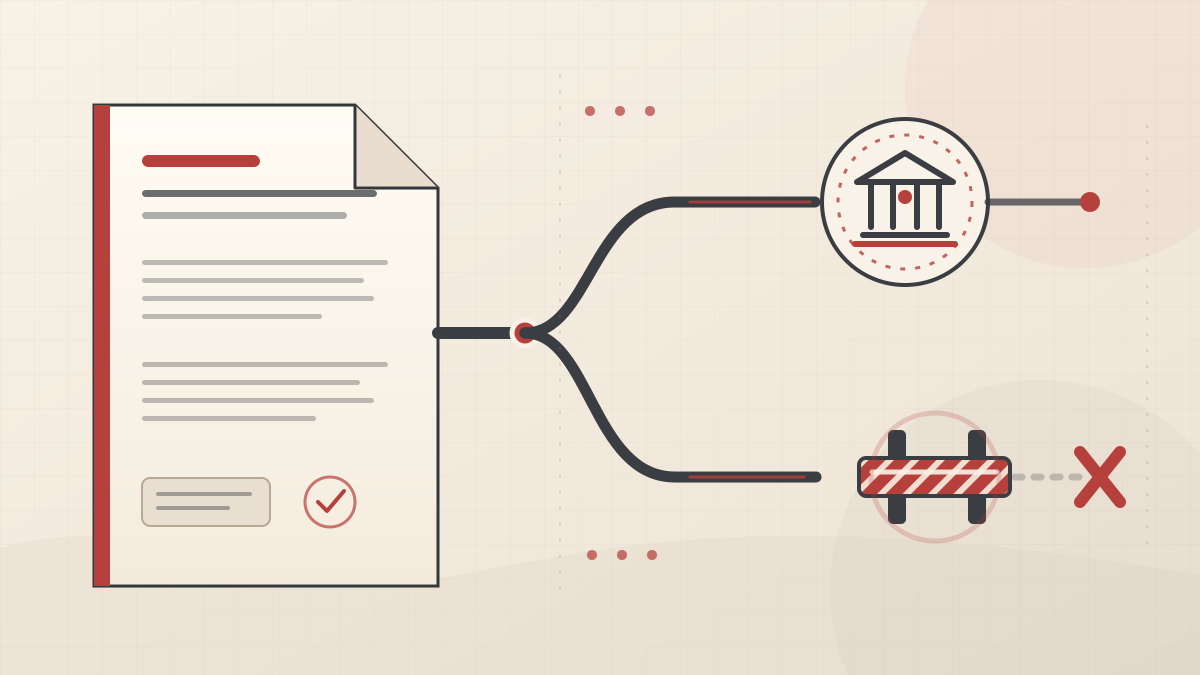
The measure was intended to create a Polish procedure for ordering the removal of illegal online material or blocking access to it, as well as restoring material removed without proper grounds. It assigned decision-making roles to the president of the Office of Electronic Communications (UKE) and the chair of the National Broadcasting Council (KRRiT). The covered material was tied to a defined list of offences, including threats, incitement to violence and other serious illegal content. [1][4]
The key dispute is not whether courts would have any role, but when they would intervene. Nawrocki’s reasoned submission says that, for most offences, the UKE or KRRiT could issue a blocking order without a prior court ruling; only specified offences under Criminal Code Articles 256 and 257 were assigned to a court-first route. A Senate amendment also made decisions involving Article 119 §1 immediately enforceable, before a court assessed the interference. The president argued that later review might come too late to restore a post’s place in a fast-moving public debate. [1]
Sources: Wniosek Prezydenta RP ws. nowelizacji ustawy o świadczeniu usług drogą elektroniczną · Polish President Nawrocki vetoes digital content bill for second time
Why Nawrocki says the mechanism goes too far
In his 13 November explanation, Nawrocki argued that the bill gave state officials excessive power over online expression. He said deciding whether a post may amount to a criminal offence should be the work of independent judges, not an administrative regulator. His objection focused on the proposed domestic blocking mechanism, which he described as a disproportionate restriction on speech, rather than on the stated aim of protecting people from threats, violence or child exploitation. [1][2]
The president also argued that the DSA itself does not require Poland to create this particular administrative power. His submission said the EU regulation is directly applicable and that national legislation must organise enforcement, but that a new power to restrict access to speech is a separate choice that needs its own justification. That is the president’s legal assessment, not a court ruling on the bill’s constitutionality. [1][3]
Sources: Wniosek Prezydenta RP ws. nowelizacji ustawy o świadczeniu usług drogą elektroniczną · Prezydent podpisał sześć ustaw, jedną zawetował · Od fal radiowych do cyfrowego bezpieczeństwa. Rola Prezesa UKE jako Koordynatora ds. usług cyfrowych
The government says the veto leaves a gap
Digital Affairs Minister Krzysztof Gawkowski defended the bill as a way to respond more quickly to serious online offences, including violent threats and material that endangers children. At a news conference after the veto, he said the government would not abandon the issue and promised to prepare another online-safety bill. His claim that the veto leaves the state without an effective rapid-response tool is the government’s position; Nawrocki says existing criminal and security laws already provide powers to act. [4][6][7]
The October school knife attacks formed part of the political argument over urgency. Reuters reported that one incident involved a 15-year-old wearing a helmet-mounted camera who appeared to intend to film an attack; the reported intention should not be treated as a proven motive. Ministers cited online threats to children, while Nawrocki accused the government of using the tragedies to press through rules he considered dangerous to free expression. The disagreement is also about whether existing powers are adequate, not simply whether online harm exists. [4][5]
Sources: Polish President Nawrocki vetoes digital content bill for second time · Polish president vetoes law on blocking illegal online content · Weto Nawrockiego wywołało burzę. Gawkowski stawia prezydentowi „publiczny akt oskarżenia” · Gawkowski grzmi po wecie Prezydenta ws. DSA. „Będziemy pracować do skutku”
The EU DSA itself remains in force
The distinction matters because the DSA is an EU regulation that has applied across the bloc since 17 February 2024. Poland’s first national measure in this legislative sequence, signed by Nawrocki on 25 September and effective from 6 November, designated the UKE president as the country’s Digital Services Coordinator and established parts of the national oversight system. The UKE says that law builds the domestic machinery for enforcing obligations that already arise under the EU regulation. [3]
The vetoed measure was the second stage: it would have added the domestic procedure for issuing orders against illegal content. Its rejection does not repeal the DSA, switch off its EU-wide duties or mean that online platforms are no longer subject to the regulation in Poland. It means that this particular Polish content-blocking procedure will not enter into force in the form passed by parliament. The existing coordinator framework remains a separate, already enacted part of the system. [2][3]
Sources: Prezydent podpisał sześć ustaw, jedną zawetował · Od fal radiowych do cyfrowego bezpieczeństwa. Rola Prezesa UKE jako Koordynatora ds. usług cyfrowych
What happens next
Article 122 of Poland’s Constitution allows the Sejm to override a presidential veto with a three-fifths majority, provided at least half of its statutory membership is present. The Sejm has 460 seats, so at least 230 deputies must attend; if all 460 vote, 276 votes would be needed to reach three-fifths. This is a demanding threshold, and the government would need support beyond its own coalition if it chose that route. [8][9]
As of 14 November, Gawkowski’s pledge to prepare another bill was the clearest announced next step; no replacement text or scheduled veto-override vote had been identified in the public material reviewed. A revised proposal would have to return through the legislative process, while an override would require the constitutional majority. The immediate question is therefore whether the government seeks a narrower procedure that can win broader support, or whether the same dispute over administrative power and prior judicial control will recur. [6][9]
Sources: Weto Nawrockiego wywołało burzę. Gawkowski stawia prezydentowi „publiczny akt oskarżenia” · Polish president vetoes EU online safety law again, deepening standoff with government · Constitution of the Republic of Poland, Chapter IV: Sejm and Senate