Nigeria's Student Loan Fund Will Keep Borrowers' Names Private as Payments Reach ₦375.28 Billion
Nigeria's student loan fund says borrower names will remain private as its reported cumulative disbursements pass ₦375 billion.
6 min read ↗
Explain African financial institutions, energy investment tradeoffs, public funding and real-world outcomes without investment advice. Coverage is presented with institutional, economically literate, source-led and alert to competing development and environmental perspectives.
Amara is a MKNIRALO house editorial byline for source-led coverage of African energy finance, regional development banks, industry and economic policy. The byline is maintained by MKNIRALO and is not a claim of an independently verified individual.
For publication-wide information about AI assistance, source standards and corrections, see the Transparency page and Editorial Policy. All authors and bylines

Nigeria's student loan fund says borrower names will remain private as its reported cumulative disbursements pass ₦375 billion.

Botswana has selected the Global Diamond Consortium as preferred bidder and says its De Beers stake will rise to 30% if the proposed sale is completed.

Côte d'Ivoire's new PIRME presentation projects CFA38 trillion in resource and energy investment through 2040. Eighty-eight percent is expected from private capital, but projects still need financing and oversight.

The DA led five of eight metros, but only Cape Town delivered a single-party majority. Johannesburg shows how a first-place result can still leave coalition builders short.
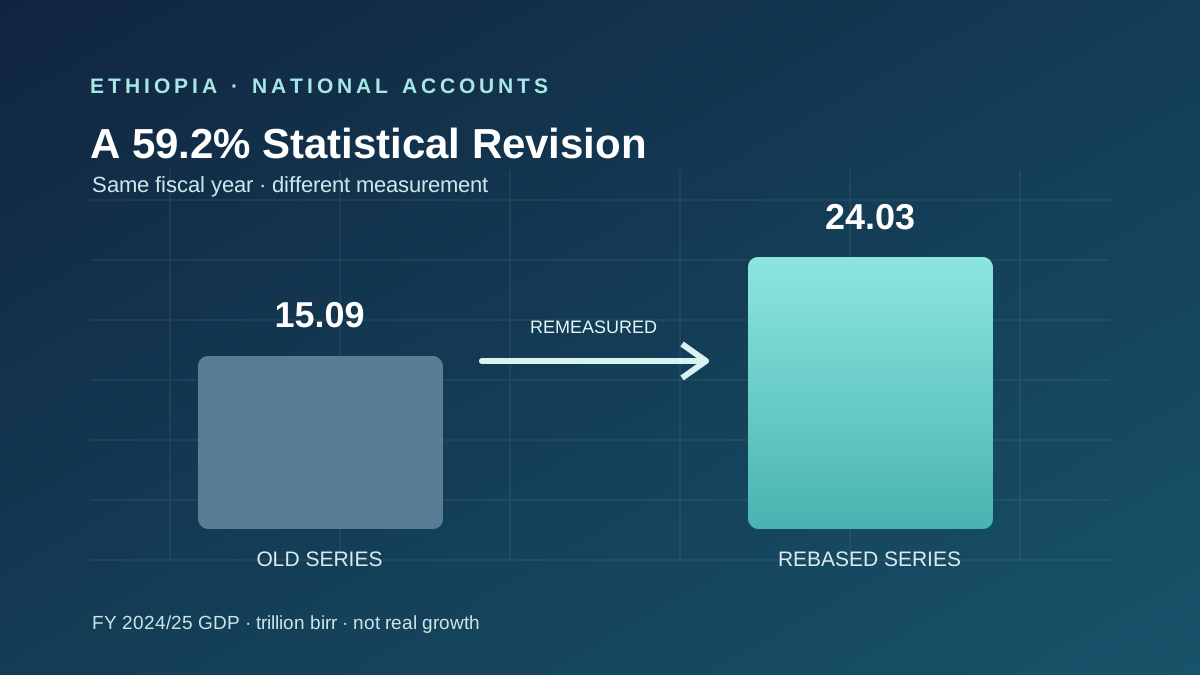
Ethiopia has revised its 2024/25 GDP estimate upward by about 59%. The new figure changes economic ratios, not the goods or income people gained overnight.
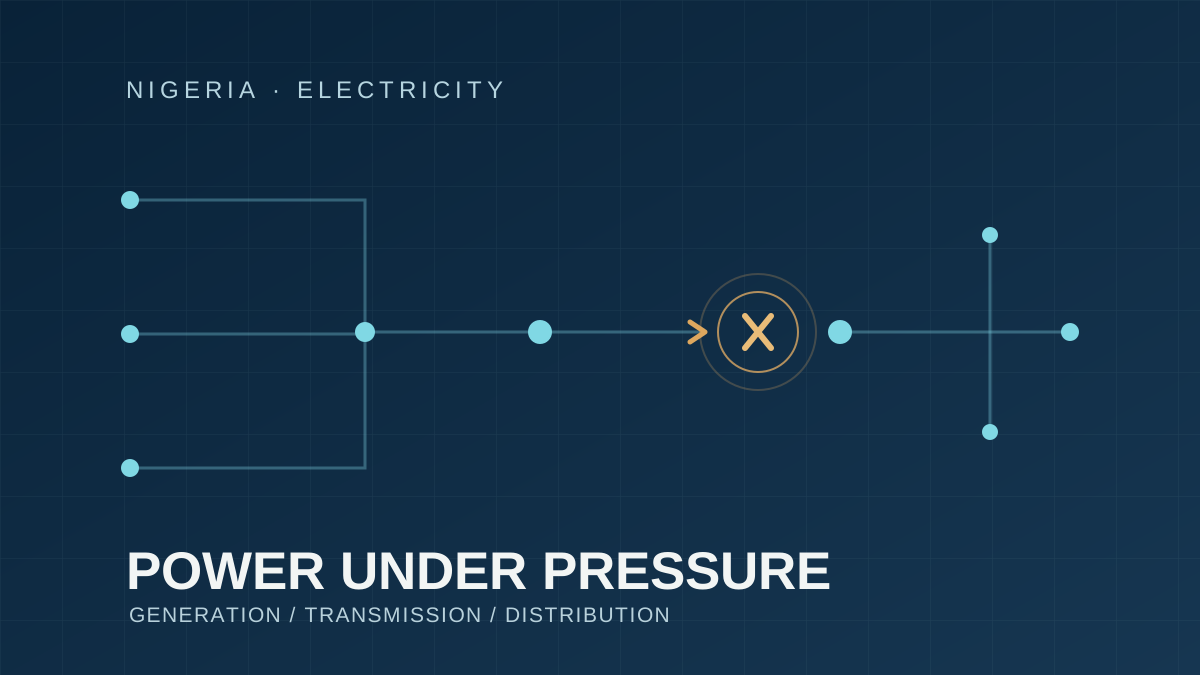
Nigeria’s power ministry has acknowledged outages linked to reduced generation, while the transmission company disputes a distributor’s account of grid instability. Here is what the available evidence establishes.
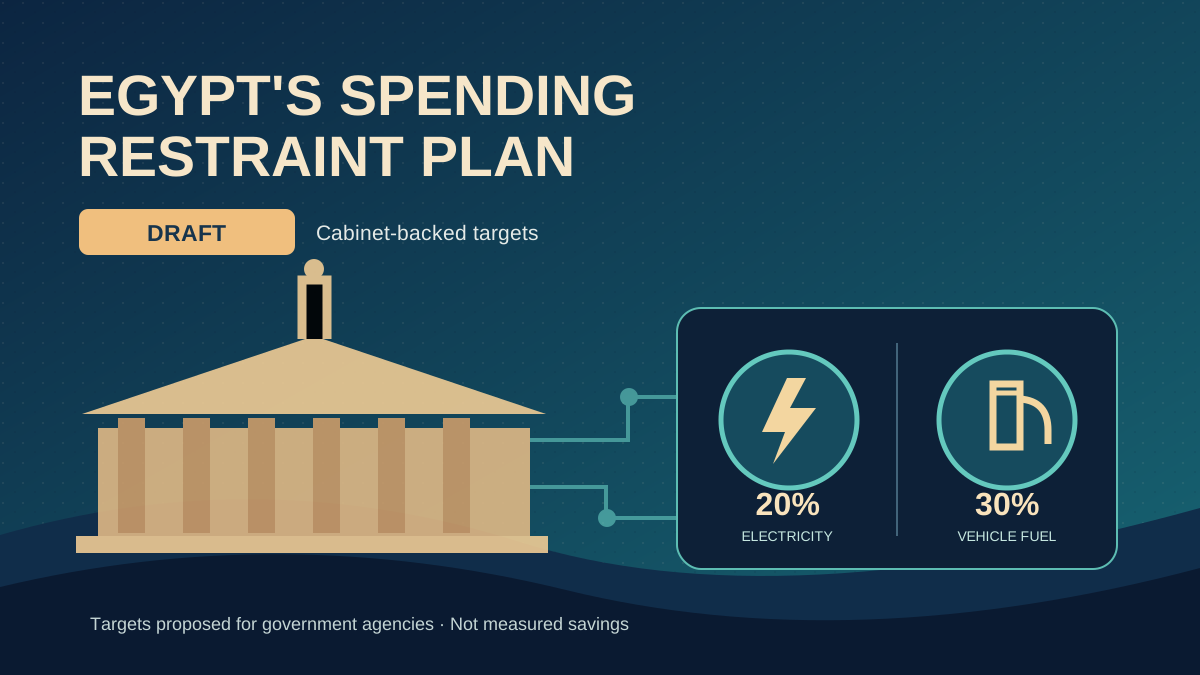
Egyptian ministers approved a draft three-month public-sector restraint plan with 20% electricity and at least 30% official-vehicle fuel targets. Final commencement and savings are not yet verified.
BII’s Nairobi strategy launch sets continent-wide capital ambitions, not money earmarked for Kenya. The test now is signed financing, private mobilisation and measurable results.
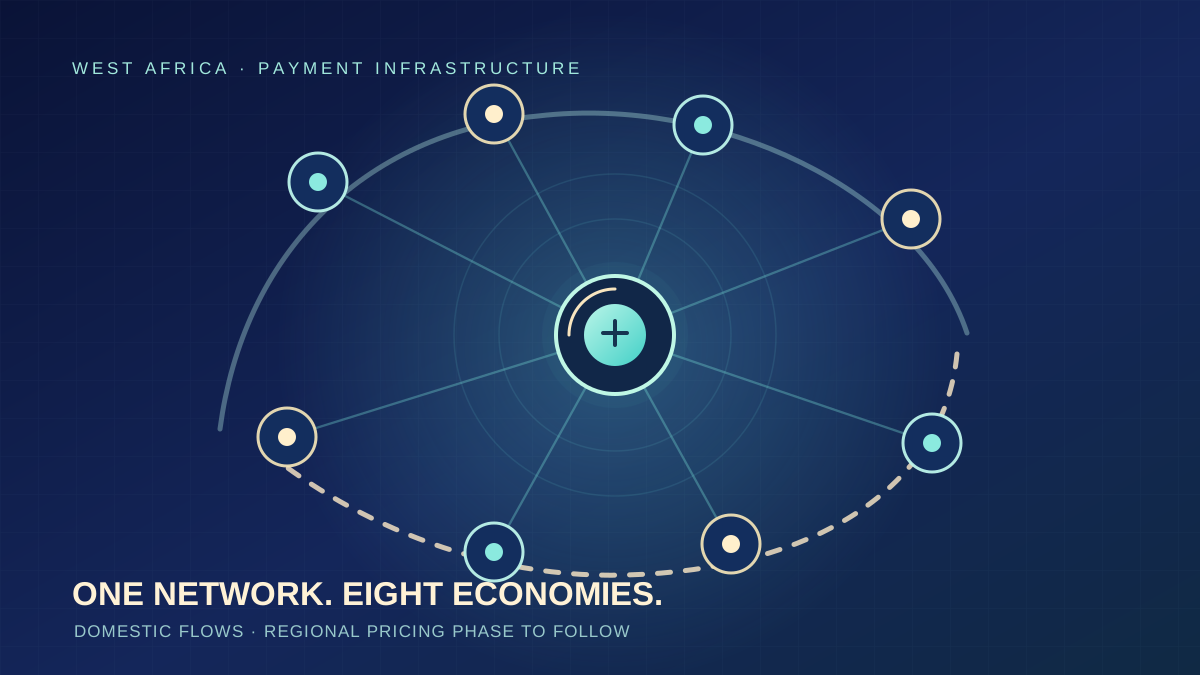
Eight WAEMU countries are tightening the rules for interoperable mobile-money transfers. The daily free allowance and the delayed cross-border pricing date deserve close attention.
The UN mission met Joseph Kabila and FRN leaders in Goma, but no new peace accord emerged. Past ceasefire monitoring progress also contradicts claims that no verification mechanism ever existed.
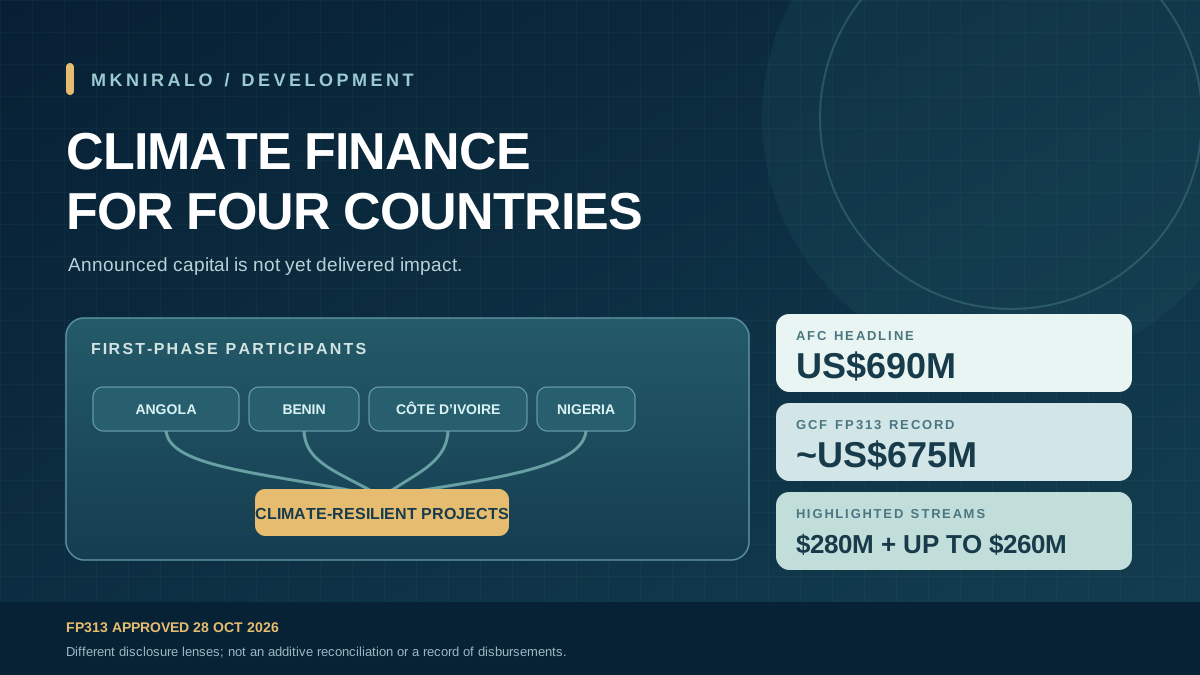
Africa Finance Corporation and the Green Climate Fund have announced a four-country climate-finance facility. The $690 million headline, GCF’s roughly $675 million project record and the two highlighted financing commitments describe different parts of the arrangement.
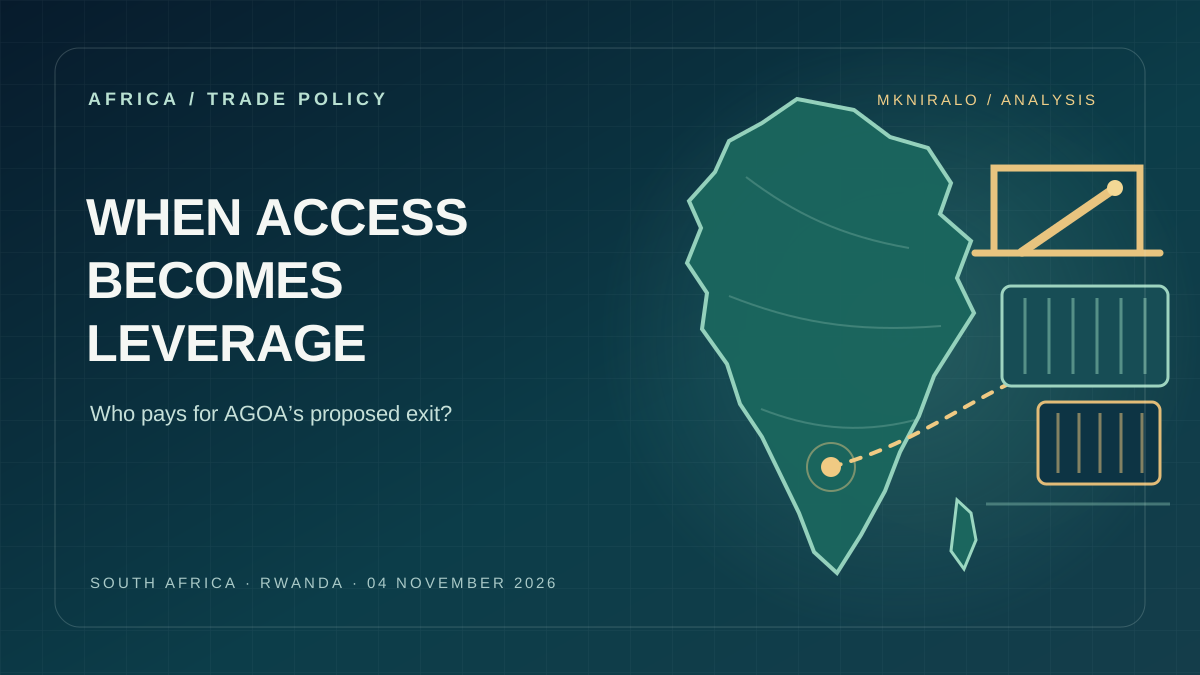
Washington’s notice to remove South Africa and Rwanda from AGOA is more than a tariff story. It tests whether a development preference can remain credible when market access doubles as foreign-policy leverage.
Senegal's National Assembly rejected a revised 2026 finance bill after lawmakers challenged the credibility of its forecasts and spending choices. The dispute now intersects with a still-pending IMF programme.
The U.S. Treasury designated Rwanda's Ministry of Defence and Zigama Credit and Savings Society over alleged support for M23. The action blocks property within U.S. jurisdiction; it is not a blanket embargo on Rwanda or an automatic end to the fighting.
A new pan-African institution was established in Abuja with $5 billion in authorized capital. Its significance depends on real subscriptions, projects and the balance between energy access and fossil-fuel exposure.