The UK government has announced plans to require employers to disclose salary information in job adverts, presenting the proposal as a way to make recruitment fairer and help young people assess vacancies. The “say what you pay” announcement, made on November 5, is a commitment to legislate—not a rule employers must already follow. Ministers have yet to publish a bill or define exactly what adverts must contain.
A government pledge, not a legal duty
The Prime Minister’s Office said the government would bring forward legislation “as soon as possible” to make salary information a legal requirement in job adverts. Prime Minister Andy Burnham urged businesses to publish pay now, but that appeal is voluntary until a law is enacted. Reuters reported that no timetable for introducing the legislation had been supplied.
The announcement therefore creates no enforceable duty, commencement date or new penalty for omitting pay from an advert. The government says further details on scope, required information, implementation and enforcement will follow. It has announced an intention to legislate, not a rule that is already in force.
A bill must be introduced, scrutinised and approved by both the House of Commons and House of Lords before receiving Royal Assent and becoming an Act. Parliament may amend it during that process. Until those steps are complete and any commencement provisions take effect, employers face no new legal obligation under this announcement.
Sources: New ‘say what you pay’ law to help young people into work · Britain to make salary disclosure in job ads mandatory · How does a bill become a law? · ‘Say what you pay’: Burnham pledges mandatory salaries in job adverts
What employers may have to disclose is still unclear
Burnham described the intended rule as applying to “all employers”, and the official release says employers would have to include salary information in job adverts. That sets the broad direction, but not the final legal boundaries. The government has not specified which vacancies or recruitment arrangements would be covered, or whether any employer-size or sector exemptions would apply.
The announcement also leaves open what counts as disclosure. A single salary, a defined range, a pay scale with an expected starting point, and a wider package including bonuses are different forms of information. Ministers have not said which would satisfy the requirement, how wide a permitted range could be, or whether disclosure outside the advert could ever qualify.
The release does not announce a ban on salary-history questions, a right to obtain colleagues’ pay information or a compulsory pay questionnaire. The Equality and Human Rights Commission has separately recommended broader reforms, including a salary-history restriction and a statutory questionnaire. Those recommendations are not confirmed provisions of this proposal.
Sources: New ‘say what you pay’ law to help young people into work · Britain to make salary disclosure in job ads mandatory · Firms told to publish salaries in job adverts ahead of new law · Make equal pay regime fit for purpose, equality regulator tells government · Equal pay and pay discrimination consultation: our response
The figures behind the transparency argument
The government says 41% of employers always publish salary ranges and 18% always publish specific salaries. It attributes both estimates to the Chartered Institute of Personnel and Development’s 2024 report, “Pay, performance and transparency”. The first figure concerns ranges; the second concerns specific salary information.
These are not counts of every UK job advert in 2026. The CIPD report drew on an online survey of 832 HR professionals and senior decision-makers, conducted from October 3 to 24, 2023, across private, public and voluntary-sector organisations. The figures describe what respondents said their organisations did, not a live audit of all vacancies or proof that the proportions remain unchanged.
The government also cited early analysis showing 94% of consultation respondents supported mandatory disclosure, including 93% of business respondents. The release did not state the response count alongside those percentages. They indicate support among consultation respondents, not a representative census of every employer or worker.
Sources: New ‘say what you pay’ law to help young people into work · Britain to make salary disclosure in job ads mandatory · Pay, performance and transparency 2024 · ‘Say what you pay’: Burnham pledges mandatory salaries in job adverts
Youth inactivity is the backdrop, not a measure of the policy’s effect
The government links the plan to efforts to help young people enter work. The latest ONS bulletin available on November 6 estimated that 981,000 people aged 16 to 24 were NEET in April to June 2026, equal to 13.0% of that age group. The estimate was 30,000 higher than a year earlier but 30,000 lower than in the previous quarter.
NEET is broader than unemployment. The ONS estimated that 393,000 of this group were unemployed and 588,000 were economically inactive. The latter were not in work or education and did not meet the standard unemployment definition, which includes conditions around recent job-search activity and availability to start work. The 981,000 figure is not the number actively looking for jobs.
The ONS warns that estimates for smaller groups such as young people who are NEET are more vulnerable to sampling variability, and advises focusing on longer-term movements. Salary disclosure may help applicants judge vacancies before applying, but the statistics do not show that missing salary information causes youth inactivity. There is no outcome evidence yet that this proposal will reduce the NEET rate.
Sources: New ‘say what you pay’ law to help young people into work · Britain to make salary disclosure in job ads mandatory · Young people not in education, employment or training (NEET), UK: August 2026
Supporters welcome clarity; employers warn about complexity
The government says publishing pay upfront could help applicants avoid unsuitable vacancies, expose unjustified differences and make discrimination easier to challenge. The Fawcett Society welcomed the plan, saying salary secrecy can leave women negotiating without clear information. Youth Futures Foundation said clearer pay details could help young people make informed choices and help employers attract suitable applicants.
The Trades Union Congress also welcomed the move, HRreview reported, with general secretary Paul Nowak criticising vague salary descriptions and calling for clearer remuneration information. Minister for Women and Equalities Bridget Phillipson told LBC that phrases such as “competitive salary” can deter applicants, particularly young people and women returning to work, because they cannot judge whether a role meets their needs.
The BBC reported a more qualified response from the CIPD. Chief executive Neil Carberry said salary disclosure was positive in principle but pay-setting can be complicated: employers may not have one fixed figure and may account for a candidate’s skills, experience and potential. He argued job-ad drafting was better left to good employer practice than regulation. This is an employer-group concern, not proof that transparency cannot work.
Sources: New ‘say what you pay’ law to help young people into work · Firms told to publish salaries in job adverts ahead of new law · Employers will be forced to tell applicants expected salaries, as equalities secretary tells LBC move will help close gender pay gap · ‘Say what you pay’: Burnham pledges mandatory salaries in job adverts · Make equal pay regime fit for purpose, equality regulator tells government
The next test will be the bill’s detail
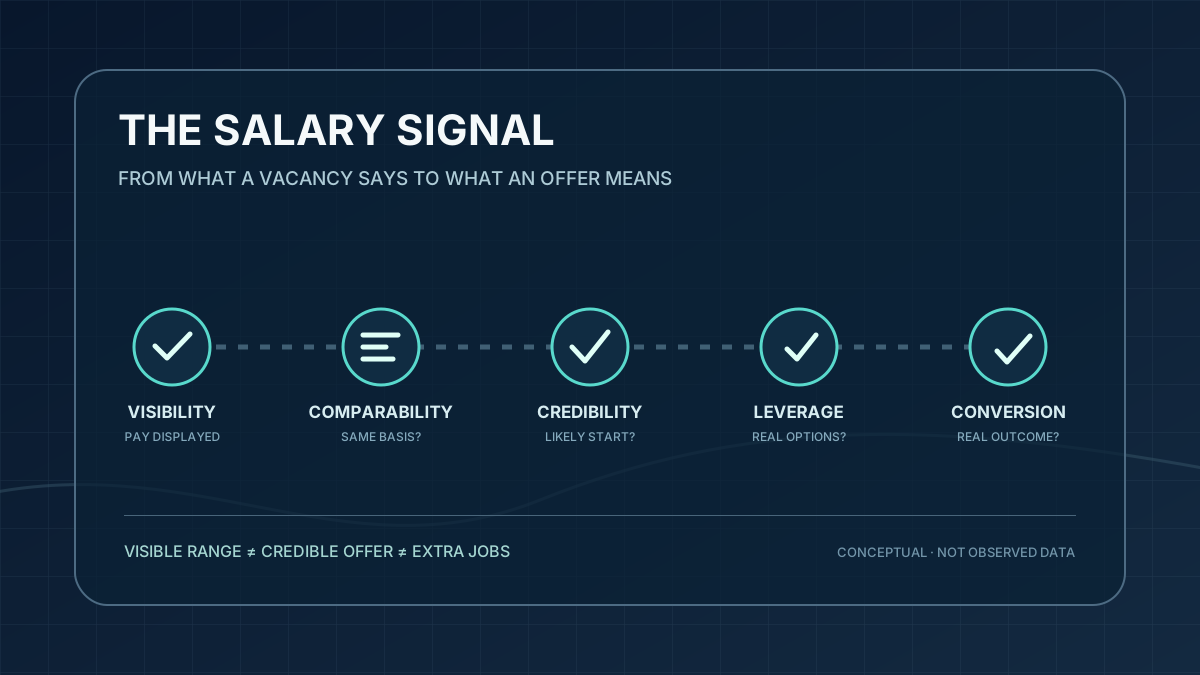
The proposal’s effect will depend on the legislation, not the slogan. A rule allowing very broad pay bands could tell applicants little more than “competitive salary”. Requiring one fixed figure in every case could be difficult where pay depends on experience, seniority or a formal scale. The government has not explained how it will balance those concerns.
The Equality and Human Rights Commission has recommended a ban on employers asking candidates about their salary history, and a statutory pay questionnaire that employers must answer. That is the regulator’s recommendation in a separate consultation response, not a confirmed government standard. The commission has also said wider reforms would need adequate funding and enforcement capacity.
For now, the immediate change is political pressure to disclose pay voluntarily, not a new legal rule. The next milestones are publication of a bill, its parliamentary stages and details on coverage, permitted salary formats, exemptions, enforcement and commencement. Until then, jobseekers should not assume every advert must show pay, and employers should not treat the final compliance test as settled.
Sources: New ‘say what you pay’ law to help young people into work · Britain to make salary disclosure in job ads mandatory · Young people not in education, employment or training (NEET), UK: August 2026 · How does a bill become a law? · ‘Say what you pay’: Burnham pledges mandatory salaries in job adverts · Make equal pay regime fit for purpose, equality regulator tells government · Equal pay and pay discrimination consultation: our response