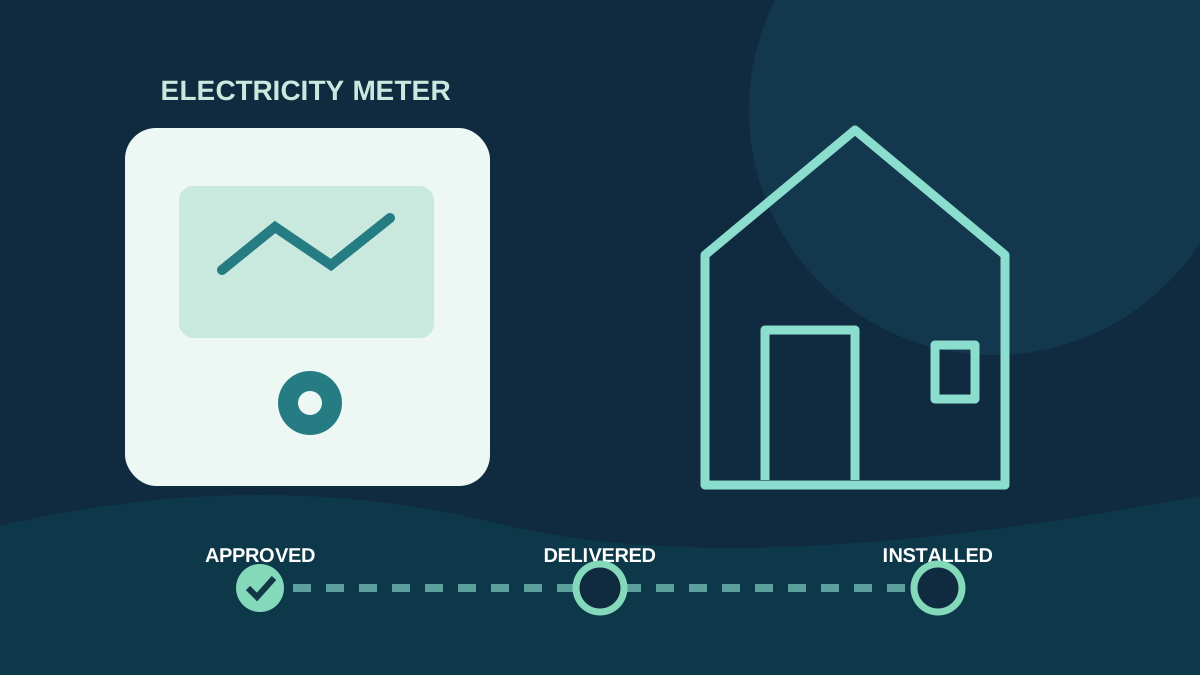
Nigeria's electricity regulator has approved ₦30 billion for a third round of electricity-meter procurement and installation, with an important condition: customers receiving meters under this programme must not be charged for them. The Nigerian Electricity Regulatory Commission (NERC) announced Order NERC/2026/121 on November 10, saying it had taken effect on November 2. The decision creates a funding and procurement framework, not a tally of new meters already working in homes and businesses. That distinction is the central test of the initiative. The order sets May 31, 2027 as the deadline for all installations under Tranche C of the Meter Acquisition Fund (MAF). Between an approved allocation and a functioning meter lie procurement, delivery, installation, verification and enforcement. Customers need the last step, not simply the first.
Why the metering gap matters
For an unmetered household or business, an electricity bill can be based on an approved estimation method rather than a direct measurement of consumption. That can make disagreements over charges more difficult to settle. A working meter gives customers and distributors a more specific basis for comparing electricity used with electricity billed. NERC's consumer-rights guidance also recognises the right to transparent billing and to challenge a disputed bill.
Metering does not, by itself, create more electricity. It cannot fix a damaged transformer, expand generation capacity or ensure that the power stays on. Its potential benefit is narrower and still important: a clearer account of consumption, an improved basis for collecting revenue and an opportunity to reduce disputes. Measuring success therefore requires evidence of devices installed and working, not claims that every electricity-service problem has been solved.
Sources: NERC consumer rights and obligations · NERC announcement of MAF Tranche C
The priorities are Band A and Band B customers
NERC says the ₦30 billion will be divided among eleven distribution companies, known as DisCos, according to their contributions to the fund. The declared priority is to install meters for all remaining unmetered Band A customers and accelerate the process for Band B customers. The regulator also requires equitable distribution among states within each company's service territory. This is a targeted tranche rather than an unconditional promise to every unmetered account nationwide.
The order announcement does not specify a verified nationwide number of customers who will be metered by this allocation. Nor does it show completed installations from Tranche C. The final number will depend in part on meter models and procurement costs, the distribution of customers, usable stock and contractors' ability to reach premises. An allocation by funding contribution is not the same thing as a published list of beneficiary households.
Sources: NERC announcement of MAF Tranche C · Order on Operationalisation of MAF Tranche C — landing page
Free really means no meter charge
The regulator says every meter supplied and installed under MAF must be free to the customer. It also requires the name of the relevant DisCo, the MAF tranche and the words 'NOT FOR SALE' to be prominently marked on the device. If a distribution company moves an existing customer's connection point for its own revenue-protection purposes, the company must cover that cost. The order provides for sanctions when DisCo defaults obstruct installation.
These provisions matter because eligibility and payment arrangements can be confusing across different metering programmes. NERC's general guidance describes some Meter Asset Provider arrangements under which a customer pays upfront and recovers the cost through energy credits; that should not be conflated with the specific no-charge rule for MAF-funded installations. A customer told to pay for a device represented as MAF Tranche C should seek written clarification of the scheme and retain any request for payment.
Sources: NERC announcement of MAF Tranche C · Complaints and redress procedure · NERC metering and MAP FAQs
How a customer can challenge an improper charge
NERC's published complaints procedure says consumers should first submit a written complaint to the Customer Complaints Unit of their DisCo and obtain an acknowledgement. If the complaint is unresolved or the response is unsatisfactory, it can be escalated to the local NERC Consumer Forum; a further appeal can go to the Commission.
That is an official general electricity-complaints pathway, not proof that NERC has created a separate Tranche C hotline or that any specific fee dispute has already been resolved. The distinction helps customers avoid relying on an invented contact channel. A practical check is whether the proposed device is genuinely within MAF Tranche C, and whether the company can identify the programme and the distributor responsible for installing it.
Sources: Complaints and redress procedure · How to file a complaint
Payments separate delivery from installation
DisCos are directed to run transparent procurement procedures involving eligible local meter manufacturers and assemblers and meter asset providers with verified stock. The maximum procurement prices are tied to the median national online bids in the September 2026 Meter Asset Provider bidding cycle. These rules are intended to establish a purchasing benchmark rather than allow an unbounded price for each meter.
Under the order, suppliers are to receive 70% after meter stock is delivered and verified, with the remaining 30% payable after full installation is confirmed. These percentages describe future payment milestones, not evidence that either payment has already been made. Keeping money linked to confirmed installation is significant, but a warehouse delivery record and an activated household meter are still different outcomes. Public reporting needs to distinguish both.
Sources: NERC announcement of MAF Tranche C · Order on Operationalisation of MAF Tranche C — landing page
What the May 2027 deadline can actually prove
All Tranche C installations must be completed by May 31, 2027, according to NERC. Supply and installation contracts must be filed with the Commission, and the fund manager, distributors and participating providers face monitoring, reporting and evaluation obligations. A dated deadline creates a benchmark against which the implementation can eventually be measured; it is not evidence that the benchmark has already been met.
TheCable reports that earlier allocations were ₦21 billion and ₦28 billion. Together with the new ₦30 billion, those figures amount to ₦79 billion in approvals over three tranches. This is an arithmetic total of reported approvals, not a verified expenditure total or installation count. The most informative future figures would show contracted meters, independently checked deliveries, completed installations, operational devices, the states served and the movement of customers away from estimated billing. Until those measures appear, the decision remains an approved programme whose real-world results are still to be demonstrated.
Sources: NERC announcement of MAF Tranche C · NERC approves N30bn for free meters distribution, targets Band A, B customers · NERC okays N30bn to meter Band A customers · Nigeria Moves to Close Metering Gap with ₦30bn Fund