China's Ten-Month Goods Surplus Tops $1 Trillion
China recorded a $1.04 trillion goods-trade surplus from January to October, while imports grew faster than exports in yuan terms.
6 min read ↗
Explain how demographic transitions interact with economic development, labour-market transformation, productivity, informality, human capital and social protection across South Asia. Also covers China and global trade balances (goods-trade data in yuan and U.S. dollar terms, customs releases and trade-policy debate). Coverage is presented with analytical, evidence-led, accessible and precise about statistical definitions, time horizons, uncertainty and causal limits.
Saira is a MKNIRALO house editorial byline covering South Asian development, demographic change, labour markets, human capital and the policy choices that shape economic opportunity. The byline is maintained by MKNIRALO and is not a claim of an independently verified individual.
For publication-wide information about AI assistance, source standards and corrections, see the Transparency page and Editorial Policy. All authors and bylines

China recorded a $1.04 trillion goods-trade surplus from January to October, while imports grew faster than exports in yuan terms.

The third-quarter jobless rate increased even as employment grew, underscoring the difference between adding jobs and absorbing a growing labour force.

Nepal has approved a framework tying wages, social-security contributions and worker identification to government procurement. It is a significant change for workers on public contracts, but the quoted totals include contributions that should not be confused with take-home pay, and the rules' impact depends on contractors, budgets and inspections.
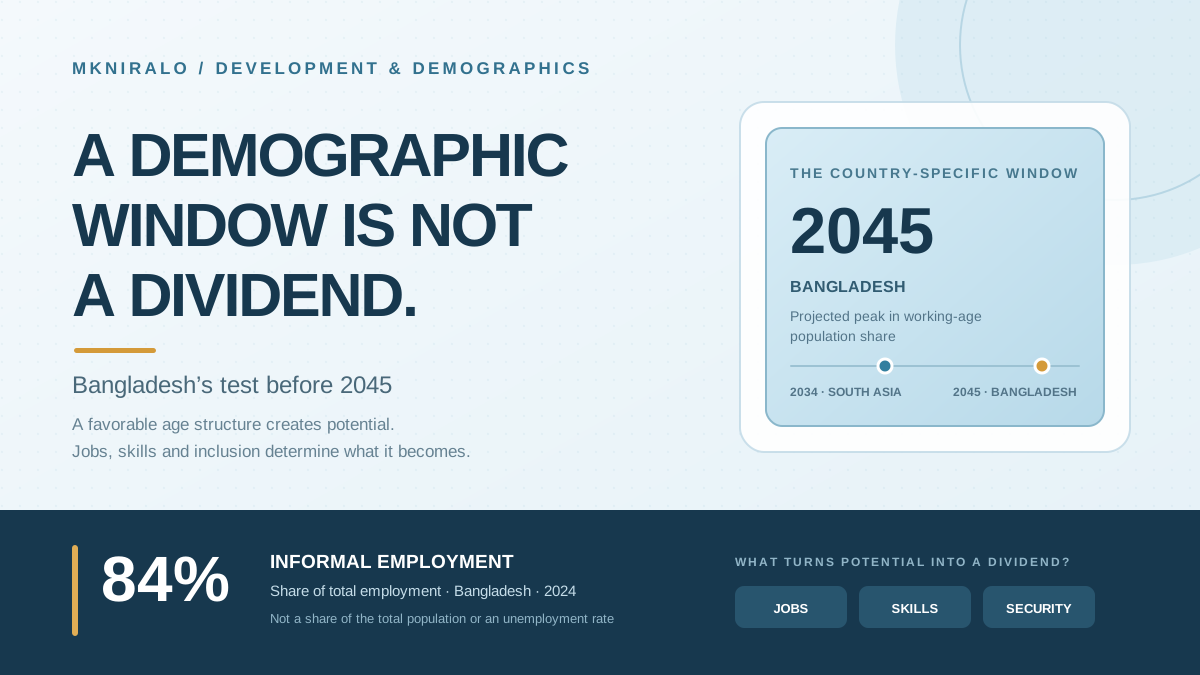
Bangladesh’s working-age population share is projected to peak in 2045. That gives the country time—but no guarantee—to turn a favorable age structure into productive jobs, higher incomes and stronger social protection.