The United Nations is warning that South Sudan’s planned December 22 election cannot be judged by polling day alone. Officials are pressing ahead with preparations for the country’s first national vote since independence, while the UN mission says the time available, security conditions and unfinished commitments under the peace agreement leave the wider transition uncertain.
A deadline that does not settle the transition
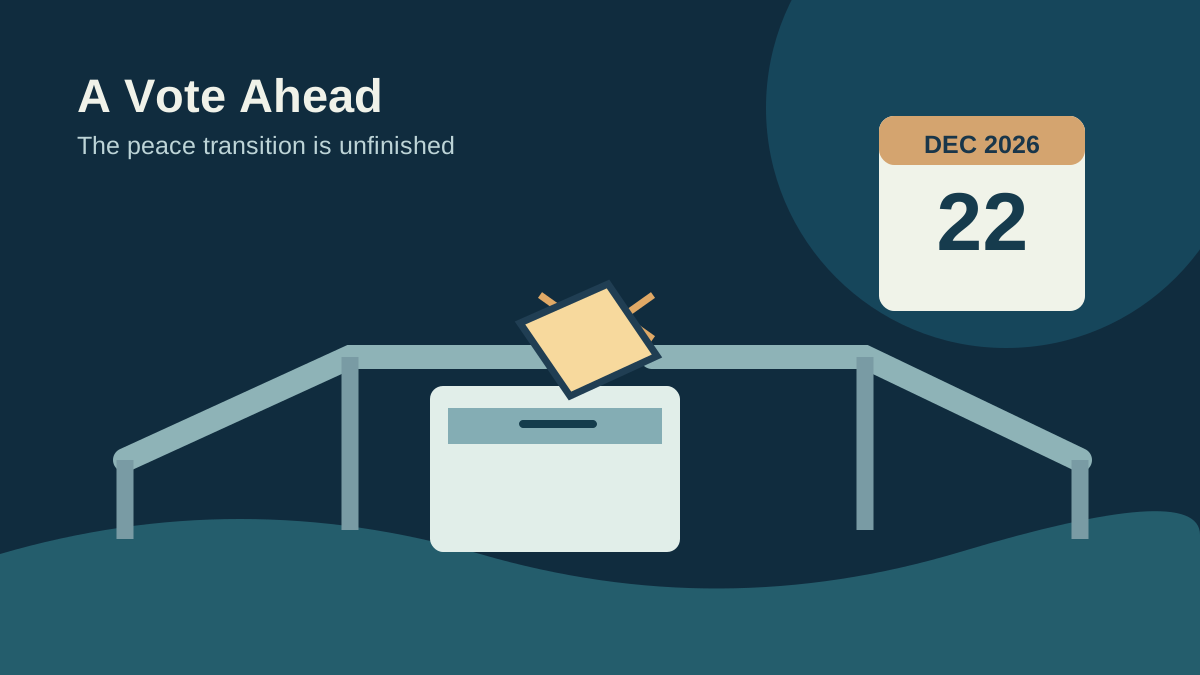
South Sudan is preparing for elections scheduled for December 22, 2026, its first planned national vote since independence in 2011. But with 42 days remaining on November 10, United Nations envoy Anita Kiki Gbeho told the Security Council that the country was at a critical juncture. The head of the UN Mission in South Sudan (UNMISS) cited doubts about security arrangements, logistics and whether electoral authorities could complete preparations in the time available.
The timetable is real; the outcome is not predetermined. Gbeho did not announce that the vote had been cancelled or would necessarily unleash another war. Her central concern was the political process that must survive polling day. In her briefing, she said the country needed an agreed way to carry out commitments left unfinished under its peace accord, whether or not voting proceeds as planned.
Sources: UNMISS urges inclusive dialogue, protection of civilians, and renewed commitment to sustaining peace in South Sudan · Remarks by Anita Kiki Gbeho to the UN Security Council [Near Verbatim]
The peace agreement remains the test
The December plan follows repeated election delays and a 2018 peace agreement designed to end years of civil war. The agreement established a political transition, not simply a date for selecting leaders. Gbeho said essential provisions of the revitalized accord remained outstanding and called for a clear, credible route to implementing them. She warned that agreement among political actors about the transition had become increasingly fragile.
The UN briefing also described significant changes to the transitional framework: lawmakers amended the National Elections Act on September 21, and the transitional unity government was replaced with a caretaker administration on September 22. Gbeho said the government viewed these decisions as steps toward elections. That claim does not resolve whether the changes command broad political consent or how remaining obligations will be fulfilled afterward. Those questions require specific agreements and public decisions, not assumptions about the result of a future vote.
Sources: Remarks by Anita Kiki Gbeho to the UN Security Council [Near Verbatim] · South Sudan’s elections next month risk unraveling a fragile peace, envoys warn
An election timetable, with competing assessments
President Salva Kiir’s government argues that proceeding is necessary to end repeated postponements. Addressing the Security Council, South Sudan’s deputy UN ambassador, Sabino Amaikwey, defended elections as part of consolidating peace and giving citizens a choice over political leadership. That is the government’s stated case for holding the vote, rather than independent proof that the required arrangements are complete.
By contrast, Gbeho reported that Kiir’s Sudan People’s Liberation Movement was conducting nationwide primaries while electoral activity by other registered parties remained very limited. The Associated Press reported that the National Elections Commission had not announced when parties could begin registering for the polls. Its chairman, Gabriel Bol Deng, said in a statement shared with AP that the commission would act impartially. The difference between assurances and verifiable registration procedures is an immediate question for voters and parties.
Sources: Remarks by Anita Kiki Gbeho to the UN Security Council [Near Verbatim] · South Sudan’s elections next month risk unraveling a fragile peace, envoys warn
Political inclusion and safety are separate pressures
Gbeho reported that an inter-party dialogue had taken place but its outcome was still pending, while some opposition groups remained outside that process. She also said the SPLM/A-IO maintained that the release of Riek Machar was a prerequisite for its participation in dialogue. AP separately reported that Machar remained under house arrest and was on trial over charges that include treason; his allies denied the underlying allegations. These are contested political and legal circumstances, not findings of guilt established by this article.
The UN envoy noted fewer confrontations between the principal signatories of the peace agreement while warning that communal violence continued to harm civilians. A decline in one kind of confrontation does not establish safety across the country. Equally, continuing local violence should not be presented as proof that the main signatories have resumed nationwide war. Both patterns matter when assessing whether people, officials and election workers can move and participate without intimidation.
Sources: Remarks by Anita Kiki Gbeho to the UN Security Council [Near Verbatim] · South Sudan’s elections next month risk unraveling a fragile peace, envoys warn
Humanitarian access is part of the operating environment
According to UNMISS, approximately 10 million people need humanitarian assistance, and restrictions on access increased by 38 percent over the preceding year. The mission said it had doubled protection escorts supporting humanitarian operations, helping assistance reach more than 321,000 people since Gbeho’s previous briefing. These are UNMISS estimates and operational figures, not a separate census or audit conducted by this publication.
The mission also described restrictions on its own freedom of movement, including in areas affected by conflict. The election and humanitarian crises are distinct, but they share practical concerns about safe movement and functioning services. Gbeho urged all parties to uphold the ceasefire, protect civilians, allow aid to reach people in need and enable UNMISS to work. Those protections matter regardless of whether the electoral timetable changes.
Sources: UNMISS urges inclusive dialogue, protection of civilians, and renewed commitment to sustaining peace in South Sudan · Remarks by Anita Kiki Gbeho to the UN Security Council [Near Verbatim]
What can be checked next
The immediate milestones are concrete: the elections commission’s public calendar, the start and rules of party registration, credible arrangements for security and observation, and the status of the inter-party dialogue. Equally important is an agreed plan for peace-agreement provisions that remain incomplete. These are developments that can be documented, rather than guesses about who might win or whether violence will follow.
In her Security Council remarks, Gbeho urged broader political engagement and warned against treating an election as the end of the peace process. The African Union’s envoy Jakaya Kikwete also called for dialogue and a peaceful vote, according to AP. The contrasting messages are not simply for or against elections: the government says a vote can consolidate peace, while UN and regional representatives stress that legitimacy and safety depend on the work before and after it. December 22 remains a scheduled date, not evidence that the transition’s unresolved questions have disappeared.
Sources: Remarks by Anita Kiki Gbeho to the UN Security Council [Near Verbatim] · South Sudan’s elections next month risk unraveling a fragile peace, envoys warn