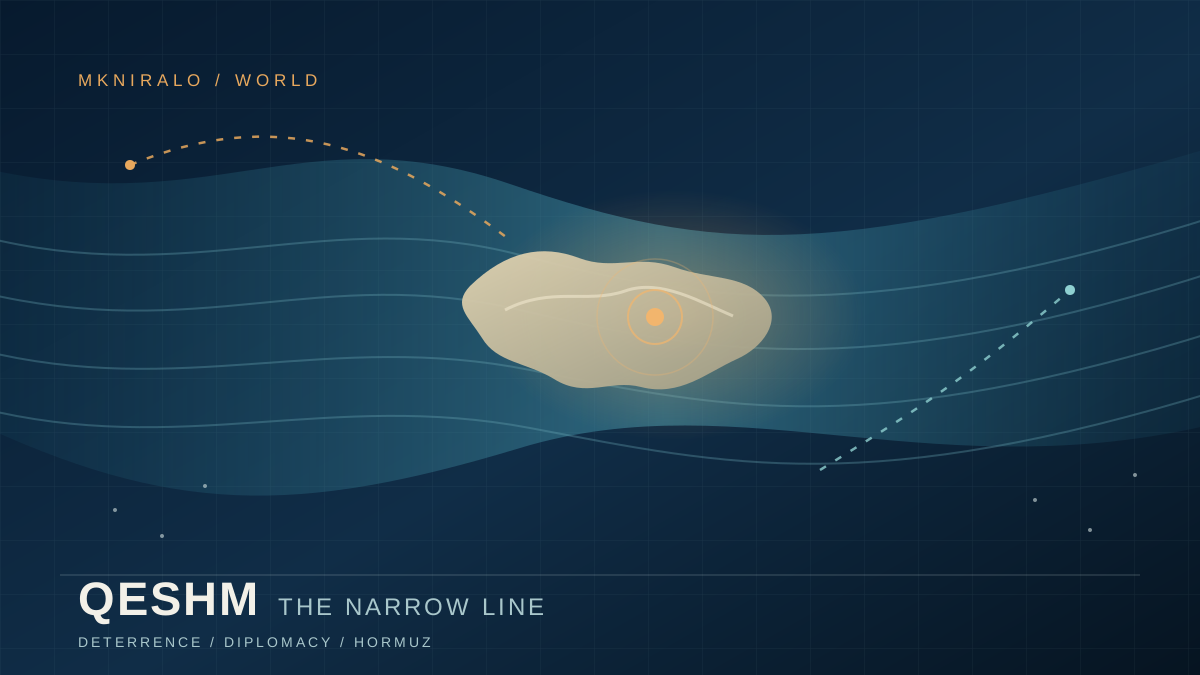
Diplomatic activity is not the same as an agreed peace. On October 31, 2026, Reuters reported Iranian representatives meeting Qatari mediators in Doha after lengthy discussions in Tehran. The contacts suggest both sides still see a reason to keep talking. But the most difficult issue is not simply identifying demands: it is deciding which side acts first while each fears losing leverage. The sequence of steps around sanctions, a port blockade, nuclear concerns and passage through the Strait of Hormuz may matter as much as the final words of any agreement.
What was reported on October 31?
Reuters, citing a person briefed on the negotiations, reported talks between Iranian representatives and Qatari intermediaries in Doha on Saturday. Those followed extended discussions in Tehran on Friday. The same reporting said the mediation was coordinated with Washington and took place amid concern about renewed military escalation after the US midterm elections.
Those details are attributed reporting about a sensitive negotiation, not a signed statement from all parties verifying the contents of every meeting. Neither the Reuters account nor Qatar's public statements establish that a ceasefire was reached on October 31. Any description of the process should retain that uncertainty rather than announcing peace prematurely.
Sources: Iranian envoys meet Qatari mediators as threat looms of US strikes after midterms · Qatar Calls for New Regional Security Framework Based on State Sovereignty Respect
Why Doha is in the middle
Qatar has repeatedly presented itself as a mediator seeking to keep communication open between Washington and Tehran. In an October 27 statement, Qatar's foreign ministry said its diplomatic contacts and exchanges continued and urged de-escalation, respect for national sovereignty and safe navigation.
Mediation here involves more than arranging a meeting. The intermediary can pass proposals, clarify which conditions are negotiable and test whether a small reciprocal action might lead to a larger agreement. Yet a mediator cannot make either principal party accept a concession. Qatar has also voiced its own security concerns about attacks in the region and freedom of passage through Hormuz; it is not a party with no interests of its own.
Sources: Qatar Calls for New Regional Security Framework Based on State Sovereignty Respect · Qatar Calls for Stronger Maritime Security and Technology to Promote Global Peace
The disagreement over who moves first
Reuters described competing approaches to negotiations. Washington wants nuclear questions addressed from the outset, while Iranian officials have insisted on action concerning the blockade and sanctions before broader commitments. The accounts of proposed seven-day confidence-building steps remain proposals, not obligations established by an executed accord.
Sequencing matters because an action can be easy for one side to verify but hard to reverse. Lifting a restriction, restarting inspections or reopening shipping can alter bargaining power before the next demand is fulfilled. A workable arrangement would need clarity about timing, monitoring, reciprocal steps and what happens if a party concludes the other has not complied.
Sources: Iranian envoys meet Qatari mediators as threat looms of US strikes after midterms · Qatari mediators return to Tehran to push for US-Iran deal
Why the Strait of Hormuz matters beyond the talks
Qatar's foreign ministry called for navigation through the strait to be protected and rejected using the waterway as political leverage. The strait is a critical passage for energy shipments, which means interruptions may affect importers and consumers far from the Gulf even when they are not involved in the fighting.
That global connection explains why energy markets, insurers and governments watch negotiations closely. It does not mean every price change has one cause or that one diplomatic meeting automatically restores normal shipping. Safe passage depends on conditions at sea and on whether the relevant parties and operators believe that risks have genuinely changed.
Sources: Qatar Calls for Stronger Maritime Security and Technology to Promote Global Peace · Iran sees only unacceptable ideas in latest mediation to end war
How can readers separate signals from a settlement?
Reliable evidence of a breakthrough would include matching official descriptions of commitments, a timetable, agreed verification procedures and observable changes in behaviour. Anonymous briefings can reveal an active process, but the words 'proposal', 'draft', 'consultation' and 'agreement' are not interchangeable.
Equally, statements from a government should be identified as that government's position. Qatar's account of what is necessary for stability, Tehran's concerns about sanctions and Washington's nuclear objectives describe different interests. A balanced explainer can report these positions without endorsing the claims or predicting which party is morally or strategically destined to prevail.
Sources: Iranian envoys meet Qatari mediators as threat looms of US strikes after midterms · Qatar Calls for New Regional Security Framework Based on State Sovereignty Respect · Qatar Calls for Stronger Maritime Security and Technology to Promote Global Peace
What should we watch next?
The next useful developments would be an on-the-record announcement by the parties, a publicly described confidence-building measure, evidence that maritime access has changed, or an independently verified reduction in attacks. The failure of another proposal would also be news if its reasons could be established.
For now, the narrow conclusion is the strongest one: mediation remained active at the end of October, substantial disagreements continued, and no verified comprehensive settlement was announced in the sources reviewed for this article. The difference between talks and peace is not a footnote. It is the main story.
Sources: Iranian envoys meet Qatari mediators as threat looms of US strikes after midterms · Qatar Calls for New Regional Security Framework Based on State Sovereignty Respect · Qatari mediators return to Tehran to push for US-Iran deal · Iran sees only unacceptable ideas in latest mediation to end war