Morocco’s government and the African Development Bank Group signed a €434.4 million financing agreement in Rabat on 13 November 2026. The operation supports the third phase of the Economic Governance and Climate Change Resilience Support Programme (PGRCC-Phase III), which aims to strengthen public-sector governance, improve conditions for private investment and reinforce resilience to external and climate-related shocks. Reuters described it as a $479 million loan. This is not a stand-alone water infrastructure loan: water is one element of a wider climate-and-energy reform pillar that also covers electricity-sector governance and climate policy.
A reform programme, not a waterworks contract
The agreement supports a programme of economic and institutional reforms, not a named construction project. The African Development Bank identifies two components: strengthening public-sector capacity, and strengthening climate and energy resilience. Reuters describes the operation as a loan intended to improve Morocco’s resilience to energy and climate-related shocks. Neither account presents it as dedicated finance for a particular dam, treatment plant, pipeline or irrigation scheme.
Water appears because the second component includes modernising governance in the water and electricity sectors. It is one part of a broader agenda. The announcements identify no specific water facility, construction schedule, local project site or number of households expected to benefit. Calling the €434.4 million a water-sector project loan would therefore give the agreement a narrower, more physical purpose than the sources establish.
Sources: Morocco secures nearly 4.8 billion dirhams for reforms and resilience · African Development Bank lends Morocco $479 million for climate and energy shocks
The first pillar focuses on the machinery of government
The first component is designed to strengthen public-sector capacity. The AfDB says it will support restructuring the state-owned enterprise portfolio, modernising the public-private partnership framework and improving the business environment. It also aims to help small and medium-sized enterprises integrate into global value chains. These measures address different parts of the economy: the organisation of public assets, the rules for public-private cooperation and the conditions in which businesses operate.
The bank presents the package as a way to strengthen the private sector’s role in investment and value creation while refocusing the state on strategic functions. That is an intended direction, not evidence that new investment or more competitive firms have already resulted. The announcement lists no completed enterprise restructurings, newly signed partnership contracts or measured gains in small-business exports. Those outcomes require later implementation evidence.
Sources: Morocco secures nearly 4.8 billion dirhams for reforms and resilience
Water is one element of the climate-and-energy pillar
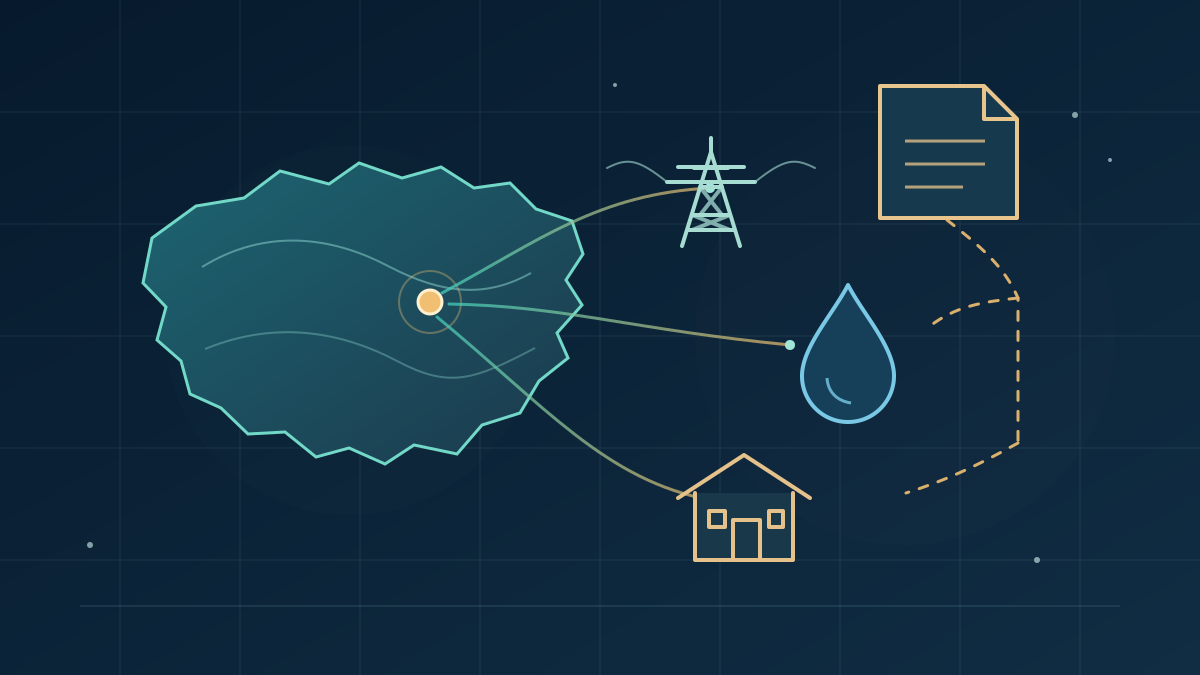
The second component is broader than water. The AfDB says it is intended to strengthen Morocco’s climate and energy resilience and accelerate the low-carbon transition. The mechanisms named are modernising governance in the water and electricity sectors and integrating climate considerations more fully into public policy. Reuters also describes support for governance reforms in both sectors. Water should therefore be understood as one sector within an institutional reform agenda, not the sole destination of the financing.
Climate resilience also depends on how public institutions plan, regulate and weigh climate risks across policy areas. The AfDB’s statement signals an intention to improve those arrangements, but does not specify which laws, agencies or procedures will change, or identify water and electricity assets to be financed. Without that detail, the agreement should not be presented as a project-by-project infrastructure package.
Sources: Morocco secures nearly 4.8 billion dirhams for reforms and resilience · African Development Bank lends Morocco $479 million for climate and energy shocks
External shocks help explain the timing
The AfDB says the third phase will consolidate reforms from earlier phases while helping Morocco address the effects of the Middle East crisis, particularly higher energy and transport costs. Reuters reports the same rationale. The bank places the operation within its Global Energy and Fertiliser Crisis Response Framework, describing it as a combination of a counter-cyclical response and longer-term resilience-building.
This is the bank’s policy rationale; the announcement does not quantify the crisis’s additional cost to Morocco or identify how much of the loan would offset a particular expense. Nor does it establish that the financing will shield households or firms from future price increases. The narrower conclusion is that the AfDB sees external shocks as a reason to support reforms it expects to strengthen resilience while sustaining the reform programme.
Sources: Morocco secures nearly 4.8 billion dirhams for reforms and resilience · African Development Bank lends Morocco $479 million for climate and energy shocks
What the announcements do not disclose
The announcement gives the amount, signing date, programme name and broad reform components. Reuters supplies the dollar equivalent and describes the operation as a loan. The two reports do not provide a repayment schedule, interest rate, maturity, disbursement calendar or detailed list of policy conditions. They also identify no local water projects funded by this agreement. Such details should not be inferred from the headline amount or from the reference to water-sector governance.
Reuters also mentions a separate transaction: the AfDB issued a one-billion-dirham bond in Morocco’s currency the previous month. That bond was not part of the €434.4 million agreement signed on 13 November. Keeping the instruments distinct avoids confusing a bond issuance with the government financing agreement.
Sources: Morocco secures nearly 4.8 billion dirhams for reforms and resilience · African Development Bank lends Morocco $479 million for climate and energy shocks
The test is whether reforms become visible
The signing is a confirmed institutional milestone, not a measure of results. The programme’s ambitions—stronger public-sector capacity, a more effective partnership framework, a better business environment and greater climate and energy resilience—must be assessed against later decisions and implementation evidence. Useful questions include whether state-owned enterprise reforms are completed, whether partnership rules change how projects are prepared and governed, and whether smaller firms gain better access to wider value chains.
For the climate-and-energy component, the test is whether climate considerations become more consistently embedded in public policy and whether water and electricity governance improves in practice. The announcement supplies no outcome data against which to judge those questions today. It establishes the scope of the third-phase programme and the financing agreement supporting it. Any later assessment should distinguish reforms undertaken, money disbursed and measurable effects: related stages, but not interchangeable ones.
Sources: Morocco secures nearly 4.8 billion dirhams for reforms and resilience