Mexico’s new phone rules have arrived at the school gate, but they are not a single, exception-free ban for every student. A September federal agreement took effect on November 3, restricting personal-device use throughout the basic-school day while leaving space for teaching needs, emergencies and accessibility. The harder test is how schools translate the words of the regulation into daily practice—and how families can stay connected when something goes wrong.
A nationwide start date, not a new local trial
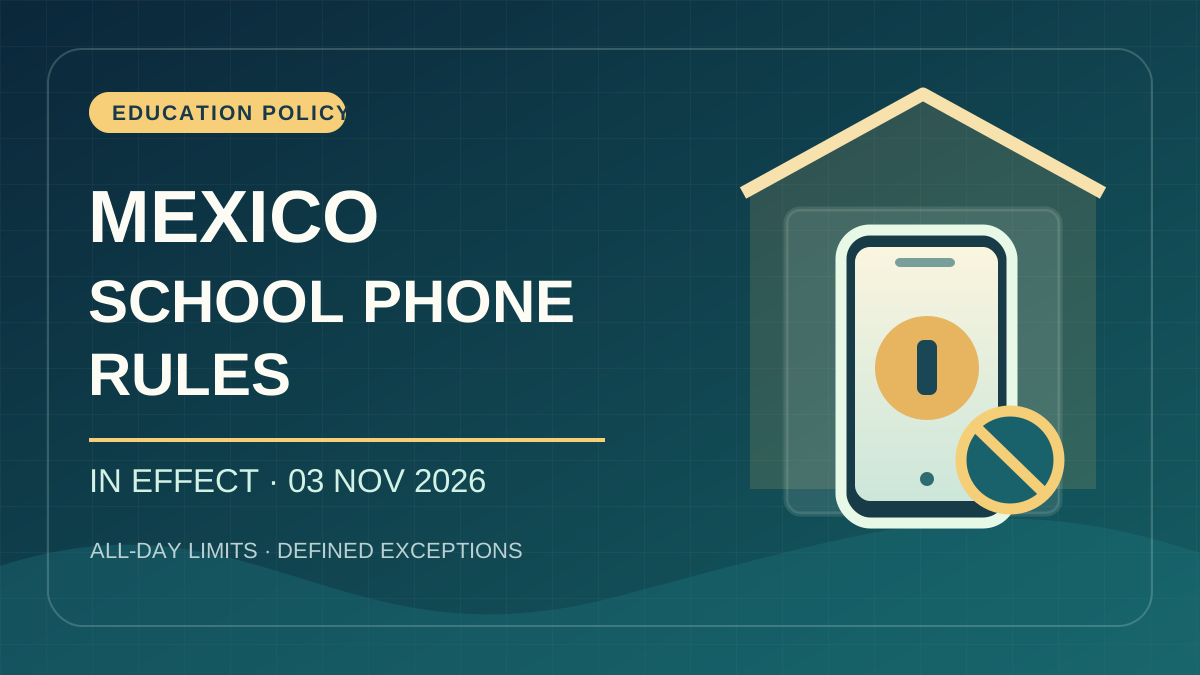
Mexico entered a new phase of school phone regulation on November 3. Federal Agreement 09/09/26, published in the official gazette on September 22, now sets a countrywide framework for the use of personal mobile phones and other electronic devices in public and private schools. It follows a consensus reached by national and state education authorities. The start date is stated explicitly in the agreement’s transitional provisions, so this is not merely a proposal or a pilot confined to one state.
By November 6, the rule had been in effect for only a few days, but implementation across a system of many different communities should not be mistaken for proof of uniform compliance. Reuters reported the announcement in September; El Economista covered its start on November 3. The immediate change is legal and administrative: schools must now apply a national framework, while local authorities and school communities still have work to do in communicating its details.
Sources: Acuerdo número 09/09/26 — derechos y uso responsable de dispositivos digitales en el Sistema Educativo Nacional · Mexico classrooms go phone-free under new school rules · Sheinbaum asistirá a jornada de lectura tras prohibición de celulares en las escuelas
What the all-day restriction actually covers
Article 2 of the agreement applies the strongest restriction to initial education, preschool, primary and lower-secondary education. Students at those levels are generally not to use personal phones, smart devices or other personal electronics throughout the school day, not simply while a teacher is speaking. Recess is included. This distinction matters because a classroom-only policy would still permit scrolling, messaging or games during the very breaks that policymakers want to preserve for face-to-face interaction.
It is a rule about use, not a blanket legal prohibition on bringing a phone through the school gate. Officials have explained that a device may be kept away or stored during school hours; the actual handling arrangements depend on the school and applicable local rules. That difference is especially important for families who need a phone for journeys before or after school. Neither the official agreement nor the reporting supports the claim that every pupil must surrender a device to a single nationwide confiscation system.
Sources: Acuerdo número 09/09/26 — derechos y uso responsable de dispositivos digitales en el Sistema Educativo Nacional · Publica SEP Acuerdo para garantizar el uso responsable, seguro y educativo de dispositivos digitales en las escuelas · Restricción de celulares en primarias y secundarias entra en vigor el 3 de noviembre; aplica también en el recreo
Exceptions are built into the text
The agreement makes room for planned educational activities when a teacher directs the use of a device for a clear teaching purpose. It also permits use in personal emergencies and for disability, accessibility, inclusion and health needs. It allows other particular and extraordinary circumstances related to a school community. These are part of the enacted national rule, not concessions announced after opposition emerged. Any account describing an absolute, exception-free ban would be incomplete.
The way an exception works in practice will depend on how schools explain procedures to families and staff. A child who uses a device for a health-related reason is not in the same position as a pupil browsing a social feed during a lesson. Likewise, a teacher-planned exercise is different from unrestricted personal screen time. The policy leaves room for educational judgment, but that also makes clear, accessible guidance essential if a protection intended for children is not to become an obstacle for those with additional needs.
Sources: Acuerdo número 09/09/26 — derechos y uso responsable de dispositivos digitales en el Sistema Educativo Nacional · Mexico bans cellphones in schools, despite opposition from parents worried about violence · Publica SEP Acuerdo para garantizar el uso responsable, seguro y educativo de dispositivos digitales en las escuelas
High schools and universities follow different rules
The national agreement reaches beyond compulsory basic schooling, but its provisions are not identical at every level. For upper-secondary education, institutions are expected to limit non-pedagogical device use through consultation and agreements with their communities. The official text describes possible approaches, including keeping phones stored during lessons, allowing use only in designated times or spaces, or setting planned educational periods. It does not impose the same single all-day rule on every high-school student.
For higher education, the emphasis is on responsible and safe use under the decisions of institutions and their communities, with university autonomy expressly respected. This graduated structure is the core of the national policy: tighter default limits for younger children, negotiated rules for older students and more institutional discretion at university level. Calling the change a nationwide school-phone ban is a useful headline shorthand only if the body of the article preserves those distinctions.
Sources: Acuerdo número 09/09/26 — derechos y uso responsable de dispositivos digitales en el Sistema Educativo Nacional · Mexico classrooms go phone-free under new school rules · A partir del 3 de noviembre ¡Apaga la pantalla y enciende tu imaginación! Entran en vigor lineamientos para uso de celulares
Parents raise a different question: staying connected during danger
The Associated Press reported support from researchers and some parent advocates, but also concerns from families in regions affected by violence. Parents described phones as a way to check that their children are safe when an alarming event occurs. AP reported on a shooting at a bus carrying high-school students in Sinaloa as part of that wider anxiety. The episode helps explain the fear; it does not mean the basic-school restriction itself governed the students on that bus, since upper-secondary schools have separate arrangements.
Those concerns should not erase the law’s emergency exception, but neither does an exception settle every practical question. Families may still want to know who decides when an emergency qualifies, whether a child can reach a parent without delay and how a school communicates when networks or staff are overwhelmed. AP also reported that a parent advocate called for awareness efforts and teacher training. The tension is not simply between parents who favor or oppose technology: attention and safeguarding are both real needs.
Sources: Mexico bans cellphones in schools, despite opposition from parents worried about violence · Acuerdo número 09/09/26 — derechos y uso responsable de dispositivos digitales en el Sistema Educativo Nacional · Restricción de celulares en primarias y secundarias entra en vigor el 3 de noviembre; aplica también en el recreo
The first test is implementation, not a promised outcome
The Education Ministry says the restrictions are intended to support concentration, learning, mental well-being and interaction among students. These are policy objectives and the government’s rationale; their achievement in Mexican schools cannot be established merely from the date a rule takes effect. The ministry said it consulted teachers and education authorities before adoption, while the agreement requires education authorities to explain the changes to school communities.
The legal text also gives state and Mexico City education authorities 180 calendar days after entry into force to issue or harmonize relevant legal instruments and provides for periodic review. That creates a practical agenda: consistent guidance, inclusive exceptions, channels for urgent family contact and evidence about what happens in classrooms and playgrounds. The meaningful question after November 3 is therefore not whether the regulation exists—it clearly does—but how fairly and effectively schools put it into practice.
Sources: Acuerdo número 09/09/26 — derechos y uso responsable de dispositivos digitales en el Sistema Educativo Nacional · Publica SEP Acuerdo para garantizar el uso responsable, seguro y educativo de dispositivos digitales en las escuelas · Sheinbaum asistirá a jornada de lectura tras prohibición de celulares en las escuelas · A partir del 3 de noviembre ¡Apaga la pantalla y enciende tu imaginación! Entran en vigor lineamientos para uso de celulares