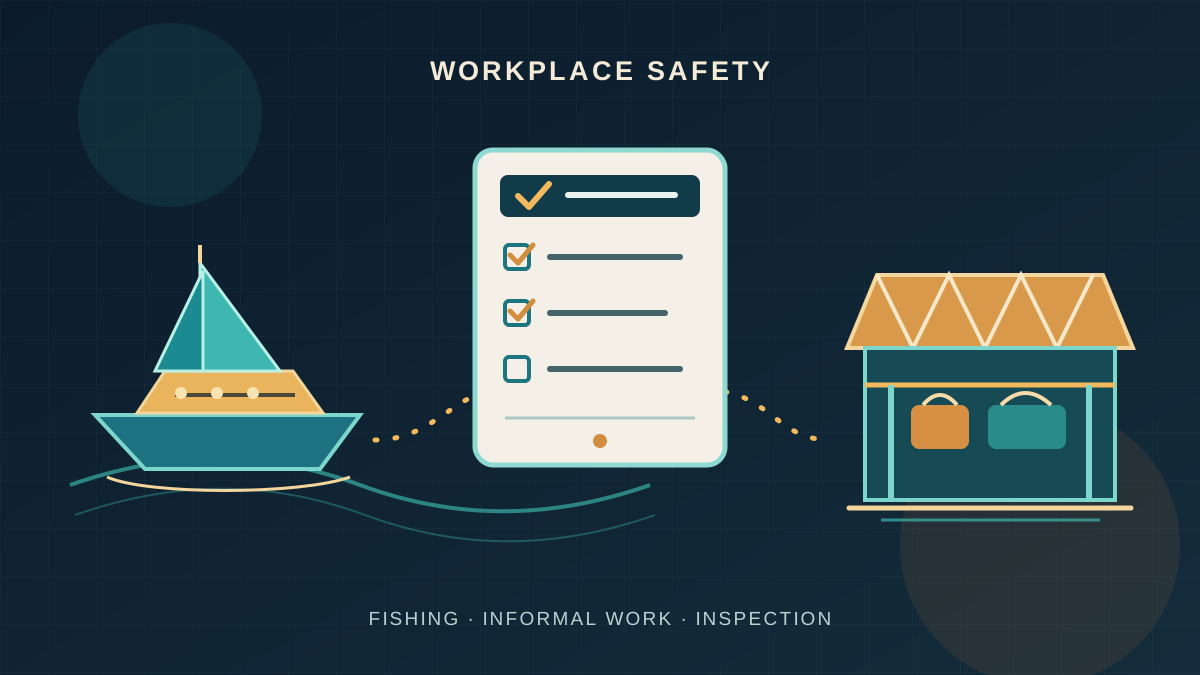
On 10 November 2026, ASEAN unveiled two workplace-protection guidelines in Clark, Pampanga: one for occupational safety and health in informal work, and another for labour inspections in fishing. The documents had already been adopted by ASEAN labour ministers on 26 August in Bangkok. That chronology matters. The launch was a public presentation of regional guidance, not the start of a uniform new law across the bloc. The harder test is what national agencies can do with it, especially when workers are dispersed across informal workplaces or are far out at sea.
A two-stage process, not a November policy surprise
The launch took place during the 15th ASEAN Labour Inspection Conference, led by Philippine Labour Secretary Francis N. Tolentino. The documents are the ASEAN Guidelines on Occupational Safety and Health in the Informal Sector and the ASEAN Guidelines on Strengthening Labour Inspection in the Fishing Sector. ASEAN says they were developed under the Philippines’ 2026 chairship. The Occupational Safety and Health Center says the informal-sector work was co-led by the Philippines, Lao PDR and Viet Nam under the ASEAN Occupational Safety and Health Network’s 2026–2030 work plan, with technical and financial support from an ILO project. It records endorsement by senior labour officials and all ASEAN member states on 30 July, followed by adoption at the 29th ASEAN Labour Ministers’ Meeting on 26 August.
The August meeting was held in Bangkok. ASEAN’s 10 November announcement says the guidelines were launched in Clark for notation by the 49th ASEAN Summit in Manila. The sequence is consultation and endorsement, ministerial adoption, then public launch—not two separate new policies or a law that came into force on 10 November.
Sources: ASEAN Launches ASEAN Guidelines to Support Decent Work in Fishing and Informal Sectors · OSHC Launches ASEAN Guidelines on Occupational Safety and Health in the Informal Sector · Joint Communique of the Twenty-Ninth ASEAN Labour Ministers Meeting (29th ALMM) · Prime Minister Opens the 29th ASEAN Labour Ministers Meeting and Related Meetings
The scale—and limits—of the informal-work estimate
An ILO regional policy brief reproduces an estimate of about 244 million workers, nearly 79 per cent of the ASEAN workforce aged 15 and older, and attributes it to the ILO’s 2018 statistical picture. The brief notes that the regional total is an estimate and exceeds the sum of countries for which data are available. It is historical, not a 2026 headcount or a precise measure of how many people the new guidance will reach.
Informality is wider than an unregistered shop or small business. ILO material notes that informal employment can exist inside formal enterprises and households as well as informal-sector businesses. Workers may move between wage work and self-employment, or combine jobs. A system built around registered employers and fixed premises can miss home-based work, street trading, small farms and other dispersed workplaces. The guideline promotes prevention, risk-based safety measures, accessible services, training, social protection and worker participation.
Sources: How to Extend Social Protection to Workers in Informal Employment in the ASEAN Region · Women and Men in the Informal Economy: A Statistical Picture, Third Edition · ASEAN Launches ASEAN Guidelines to Support Decent Work in Fishing and Informal Sectors
Fishing checks must reach beyond vessel equipment
Fishing presents a different inspection problem. A vessel may spend long periods away from shore; crews can include workers recruited across borders; and the workplace is also where people eat, sleep and depend on the vessel for their return. An inspection focused only on machinery or life-saving equipment can miss how a crew was recruited, paid and housed. Isolation and restricted movement can also make it harder to raise concerns safely.
ASEAN says its fishing-sector guideline covers the identification of competent authorities, risk-based inspection planning, accessible complaint and reporting mechanisms, inspection procedures, compliance monitoring and enforcement, and cooperation between national agencies and across the region. Its listed tools include a model fishers’ work agreement, a medical-supplies checklist, forced-labour indicators, guidance for interviewing fishers and a model inspection checklist. These are practical aids for inspectors; their publication does not establish that any particular vessel has been inspected, or that a reported abuse has been remedied.
Sources: ASEAN Launches ASEAN Guidelines to Support Decent Work in Fishing and Informal Sectors · Dole leads Asean drive for safer workplaces
Guidance is not an enforcement budget
The ASEAN announcement describes the documents as guidelines and practical guidance; the Philippine OSHC describes the informal-sector measures as recommendations. Neither announcement sets out a single region-wide inspection service, common sanctions or a new body with power to enforce the measures in every country. National authorities still have to decide which agencies lead, what domestic rules apply, how inspectors coordinate and whether workers can use complaint channels without retaliation.
The OSHC says a technical workshop is planned for 2027 so member states can discuss implementation strategies and work plans suited to national priorities. That is a next step, not a deadline for uniform implementation. Public materials reviewed here do not identify which governments have committed specific budgets. Nor do they establish that unions or fishers’ organisations can independently inspect complaint files or verify how individual cases were resolved. An announced channel is not the same as a trusted, independently testable remedy.
Sources: ASEAN Launches ASEAN Guidelines to Support Decent Work in Fishing and Informal Sectors · OSHC Launches ASEAN Guidelines on Occupational Safety and Health in the Informal Sector
Indonesia’s national rules are a separate development
Indonesia offers a useful example of why regional guidance must be kept separate from domestic law. Its fisheries ministry’s Regulation No. 4 of 2026 governs fishing-vessel crewing, training and certification. The legal registry dates it to 5 February 2026. Presidential Regulation No. 25 of 2026, which ratified ILO Convention No. 188 on work in fishing, was issued later, on 24 April. ANTARA reported on 26 July that ministry officials described the earlier crewing regulation as a way to implement convention provisions, including requirements on crew age, competency, medical certificates, work agreements and social security.
Indonesia deposited its ratification instrument with the ILO on 10 June 2026; Convention No. 188 will enter into force for the country on 10 June 2027. The sequence matters: the ministerial regulation predates the presidential ratification and the treaty’s entry into force. It is a national policy development, not a result of ASEAN’s November launch, and it does not show that the regional guidelines have changed inspection practice across ASEAN.
Sources: Peraturan Menteri Kelautan dan Perikanan Nomor 4 Tahun 2026 tentang Tata Kelola Pengawakan Kapal Perikanan, Pendidikan dan Pelatihan, Ujian dan Sertifikasi Awak Kapal Perikanan · Perpres No. 25 Tahun 2026 on the Ratification of ILO Convention No. 188 · RI terapkan Konvensi ILO 188 lewat aturan baru awak kapal perikanan · Indonesia ratifies the Work in Fishing Convention, 2007 (No. 188) · Indonesia Ratifies ILO Convention 188 to Protect Fishing Vessel Crews · Work in Fishing Convention, 2007 (No. 188)
The test is what workers can verify
Success should be measured by whether inspections reach high-risk vessels and informal workplaces, not by launch events or training sessions. Useful indicators include trained inspector numbers, inspection coverage, follow-up times, complaints resolved, wages recovered, access to medical care, safe repatriation and action against repeat offenders. Governments should explain how complainants are protected from retaliation and how data can be published without exposing workers.
Worker organisations, fishers’ groups and civil-society monitors can help test whether official claims match working conditions, but participation needs practical access and safeguards. That means knowing how complaints are received, referred and closed, and whether a worker can challenge an inadequate response. It also means seeing national work plans and the resources assigned to them. Until such evidence is available, the 10 November launch is a meaningful regional signal—but not proof that inspections are reaching more workers, or that exploitation has declined.
Sources: ASEAN Launches ASEAN Guidelines to Support Decent Work in Fishing and Informal Sectors · OSHC Launches ASEAN Guidelines on Occupational Safety and Health in the Informal Sector · Dole leads Asean drive for safer workplaces