Ableton has unveiled Live 13, the next version of its music-making software, with a public beta open as of November 10, 2026 and a full release planned for early 2027. The announcement reaches across audio editing, beat construction, sound design and mixing rather than placing one new feature at the center. For musicians, the practical question is how these tools might change the movement from an unfinished idea to a workable track. The public beta provides an opportunity to explore that direction, but it is not the finished release.
A launch announcement, not a finished release
The company announced the update on November 10 and says the completed Live 13 release is expected in early 2027. It has opened a public beta in the meantime. Both points matter: musicians can examine the new workflow now, but should not confuse an accessible test version with a completed commercial launch. Ableton has not committed to an exact final-release day in its announcement.
Resident Advisor and Attack Magazine independently reported the same schedule and summarized a broad set of additions, from ARA 2 integration to redesigned ways of sequencing and using Racks. The story is therefore not simply that another number has been added to a familiar software name. It is that Ableton is attempting to reduce the friction between sound experimentation, detailed editing and the decisions required to finish a piece of music. Whether that approach works consistently in real projects remains a question for users to test.
Sources: What’s coming in Live 13 · Ableton announces Live 13, with ARA 2 support and new Push 3 features · Live 13 Introduces Step Sequencer, Drum Synth, ARA 2 & New Racks
ARA 2 brings an editing workflow closer
One particularly consequential addition is support for ARA 2 plug-ins. These tools can exchange more detailed information with a host application than a conventional insert effect, allowing compatible audio-editing workflows to sit closer to the arrangement. That can matter when a producer needs to refine a vocal take, correct timing or work with recorded material while keeping the wider song in view. Ableton's beta notes specifically describe ARA plug-ins in Arrangement View.
There is an important boundary to that promise. The documented beta implementation does not support ARA plug-ins in Session View. Users also need compatible plug-ins; ARA support is not a claim that every editing tool works this way. Resident Advisor reports that Live 13 Suite will include Melodyne Essential, but that bundle detail should not be generalized to every edition. The feature's appeal is integration, not the elimination of careful listening or editorial choices.
Sources: What’s coming in Live 13 · Ableton announces Live 13, with ARA 2 support and new Push 3 features · Live 13 Beta Release Notes
A Step Sequencer for patterns that keep changing
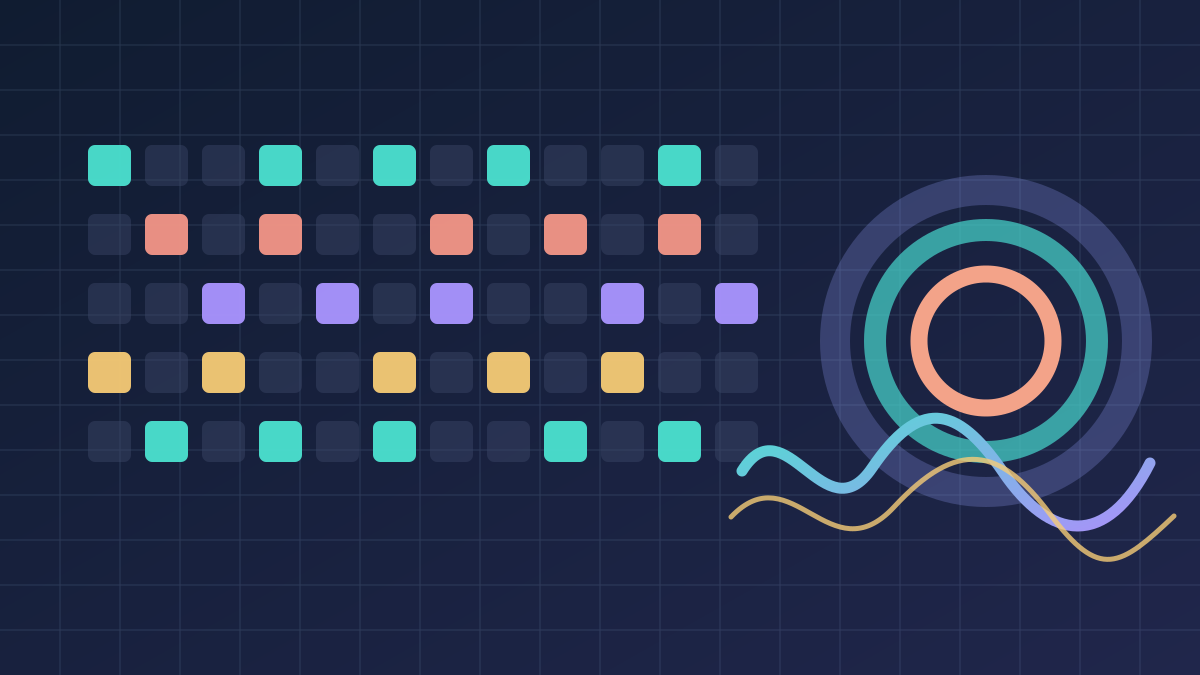
Live 13 introduces a Step Sequencer that allows musicians to build MIDI patterns with rows operating at different lengths. In a straightforward drum pattern, each sound might repeat on a common grid. Independent row lengths open another possibility: a short hi-hat figure can keep cycling while a longer percussion line shifts against it, creating variation without manually drawing every bar. Controls described by independent reporting include per-step velocity, chance, repetition and pitch bend.
That design makes a different kind of musical decision easier to reach. Instead of sketching a rigid loop and adding variation afterward, a producer can build movement into the pattern itself. It can serve beats, evolving synthesizer lines or small rhythmic details. The sequencer does not automatically make the music inventive: its value depends on how deliberately a musician uses those probabilities, lengths and accents. What changes is the number of musical options that can be explored before committing to an arrangement.
Sources: What’s coming in Live 13 · Ableton announces Live 13, with ARA 2 support and new Push 3 features · Live 13 Introduces Step Sequencer, Drum Synth, ARA 2 & New Racks
Drum Synth and Racks widen the sound-design palette
Alongside the sequencer comes Drum Synth, a new percussion-design instrument. Attack Magazine describes classic drum-machine, physically modelled and experimental engines, a combination intended to let users create sounds rather than rely entirely on existing samples. That shifts the workflow from choosing a kick or snare in a library to shaping the sound while building the rhythm. Ableton also highlights Looplet, a tool for turning an individual sample into layered, less predictable textures.
Racks receive changes with implications beyond sound selection. Ableton describes deeper Macro control and mapping, plus Multiband and Mid-Side Racks for splitting processing by frequency range or stereo position. Resident Advisor reports expanded Racks with up to 32 Macros. The creative attraction is the ability to make complex processing chains more playable and easier to revisit. Still, greater control also demands clearer organization: more parameters are only helpful if a performer can understand what each one does.
Sources: What’s coming in Live 13 · Ableton announces Live 13, with ARA 2 support and new Push 3 features · Live 13 Introduces Step Sequencer, Drum Synth, ARA 2 & New Racks
Mixing tools and Push 3 extend the same idea
The new mixing features aim at both precision and access. Ableton identifies Transient Shaper and Clipper among the additions, as well as device slots that put effects within reach from the mixer. The company also lists Capture Automation and contextual browsing, which address a familiar interruption: a good performance gesture or promising sound may disappear while someone stops to navigate menus. These additions are presented as ways to preserve momentum and then refine the result.
Push 3 users are part of the plan too. Custom Layouts are designed to let performers arrange the pad surface around their own instruments, clips and expressive controls. Ableton also describes a playable Performance Mixer and step editing on the hardware. These are not reasons to assume every Live user needs Push, or that hardware will replace the computer interface. They are signs of the same design direction: move often-used decisions nearer to the moment a musician hears an idea.
Sources: What’s coming in Live 13 · Ableton announces Live 13, with ARA 2 support and new Push 3 features · Live 13 Introduces Step Sequencer, Drum Synth, ARA 2 & New Racks
What the beta can—and cannot—tell musicians
The public beta gives interested musicians a way to inspect the new tools before the full release. It does not, by itself, establish production-level stability, compatibility with every third-party device or an identical experience across different systems. Anyone considering a beta for an important project should distinguish trying a feature from depending on it for a deadline. Ableton's beta documentation is the more appropriate place to check implementation details and changes than promotional feature descriptions alone.
There are commercial distinctions as well. Ableton's shop lists Live 13 editions as available in early 2027, and its announcement describes a temporary Live 12 discount and a corresponding Live 13 upgrade for qualifying Live 12 purchases. Those statements do not establish a universal upgrade cost or price for every region. The substantial news is the proposed shape of the workspace: closer audio editing, more fluid sequencing, flexible percussion synthesis and mixing controls. The final verdict belongs to the finished software and to the music made with it, not to the announcement.
Sources: What’s coming in Live 13 · Buy Live 13 · Ableton announces Live 13, with ARA 2 support and new Push 3 features · Live 13 Introduces Step Sequencer, Drum Synth, ARA 2 & New Racks · Live 13 Beta Release Notes