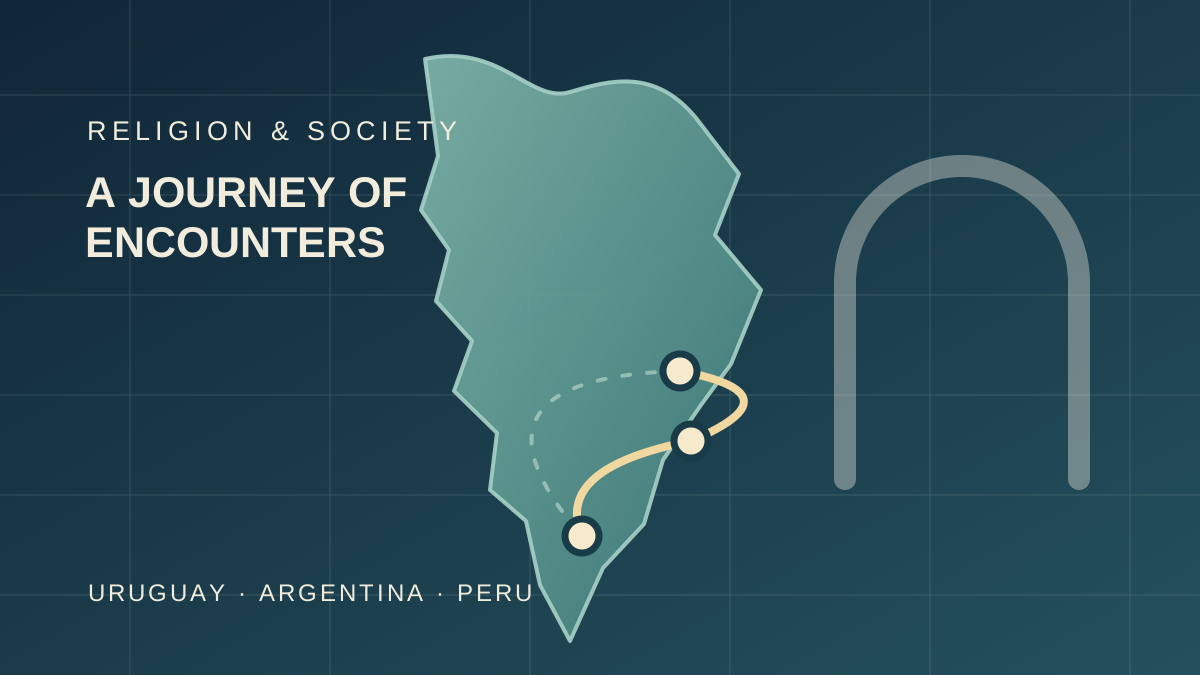
As Pope Leo XIV began the Peru leg of his South American journey on November 11, a special weather service offered a practical way to plan for outdoor gatherings. Peru's meteorological agency, SENAMHI, created a destination-by-destination forecast tool while authorities were confronting an unusually difficult rainfall outlook and preparing health facilities for large crowds. The test is not whether one forecast can promise a safe ceremony. It is whether changing information reaches people and helps organizers act before conditions deteriorate.
A forecast designed around an itinerary
SENAMHI's special portal brings together five-day forecasts, ultraviolet-radiation information, active weather notices and advice for places on the papal route. The information is available through the agency's weather observatory and mobile application, according to its announcement carried by Peru's Andina news agency. That arrangement gives participants a place to check conditions close to their destination rather than extrapolating from a nationwide headline.
The Vatican's published itinerary puts a large outdoor Mass near Pampas de Pimentel, outside Chiclayo, on November 13; another Mass is scheduled in Santa Cruz de Succhabamba on November 14. Cusco and Pucallpa follow on November 15, before a Mass at Lima's Las Palmas Air Base on November 16. These are planned engagements, not evidence that each gathering has already happened or that any projected attendance has materialized.
Sources: SENAMHI special platform for papal-visit forecasts · Apostolic Journey of the Holy Father to Uruguay, Argentina and Peru
Different locations, different hazards
The challenge is geographical as well as logistical. Coastal heat, rainfall affecting travel routes, conditions in the Andes and weather in the Amazon cannot be represented by a single risk label. A five-day outlook can support decisions about drinking-water points, shade, access to medical teams and whether people need updated travel guidance. The presence of an alert somewhere in a region does not establish that a particular ceremony site will experience its worst conditions.
Reuters reported on November 10 that Chiclayo had recently reached 30–31°C, while Lima had registered 27–30°C during the preceding week. Those are reported recent temperatures, not a guarantee of readings during the Masses. Reuters also described expectations of roughly one million pilgrims at Pimentel and 1.2 million at the Lima event; both are planning estimates rather than confirmed turnouts. Large outdoor crowds make heat exposure and access routes especially relevant, even without a severe storm.
Sources: Peru launches pope weather tracker as El Niño looms
Why the El Niño backdrop matters
The weather service was introduced against a broader emergency. Reuters said the government had placed 72% of Peru's districts under a two-month emergency declaration over the imminent danger of intense rainfall. El País separately reported that the measure covered 1,380 of the country's 1,891 districts, including all 38 districts of Lambayeque. Those numbers are presented according to their respective sources, not as competing measurements of rainfall at the papal venues.
Reuters said Peru's El Niño monitoring commission projected very strong warming through February 2027 and above-normal rainfall across much of the country between November and January. Such seasonal assessments explain why preparedness extends beyond the dates of the visit. They do not establish when a particular street will flood, nor do they prove that every recent weather disruption was caused by El Niño. Separating seasonal risk from near-term site forecasts is essential to avoiding false certainty.
Sources: Peru launches pope weather tracker as El Niño looms · Perú declara estado de emergencia por lluvias a siete días de la visita del Papa León XIV
Two yellow alerts with different purposes
Peru's Ministry of Health made two distinct decisions in the same ministerial resolution, No. 921-2026/MINSA, published October 6. The first declares a nationwide yellow alert for health establishments in connection with El Niño effects, continuing through June 30, 2027. The second covers healthcare facilities in Cusco, Cajamarca, Lambayeque, Lima, Ucayali and the Constitutional Province of Callao from November 1 to 23, specifically for the papal visit. Their geography, purpose and duration are different.
The resolution explicitly says that these preparedness alerts do not, by themselves, suspend or postpone scheduled medical care. They are arrangements for readiness, not reports that hospitals are overwhelmed. For visitors, the relevant question is how information translates into available staff, accessible medical posts and workable movement plans. Those operational details must be demonstrated separately; the existence of a yellow alert cannot establish that every facility or event is adequately prepared.
A warning is not a disaster report
Three categories of information must remain separate. A forecast estimates future weather and may change. A formal warning identifies a hazard, affected area and period that call for attention. A damage report documents what has actually occurred. Reuters and El País have reported flood damage elsewhere in Peru, but that is not evidence of flooding at Pimentel or Las Palmas during these scheduled services. Reported impacts and prospective risks should be described with their own dates and locations.
That distinction also applies to the online tracker. The portal provides an avenue for communicating conditions and notices, but it is not itself an evacuation order or proof that an organizer has implemented a response plan. As of this review, individual SENAMHI warning bulletins for every itinerary stop, including their issue and expiration times, have not been directly verified. No claim about an active extreme warning at a specific papal venue is therefore warranted.
Sources: Peru launches pope weather tracker as El Niño looms · Perú declara estado de emergencia por lluvias a siete días de la visita del Papa León XIV
What the visit can reveal about readiness
The most revealing questions will arise as the itinerary proceeds: Were updated warnings understandable and timely? Could people obtain water, shade and medical attention? Did organizers keep transport and emergency access open? Were changes communicated to travelers before they joined long queues? Answering these questions requires documented observations and agency records, not simply the existence of a forecast website or an advance crowd projection.
Peru's longer rainfall-risk horizon also means that the public value of clear weather communication cannot end when the papal aircraft departs. A service assembled for a high-profile visit can illustrate how location-specific information helps people make decisions, but its effectiveness remains to be assessed. The defensible conclusion on November 11 is that Peru has added a targeted information tool and declared separate health-readiness measures while substantial weather risks remain—not that disaster has struck every venue, or that the measures have already succeeded.