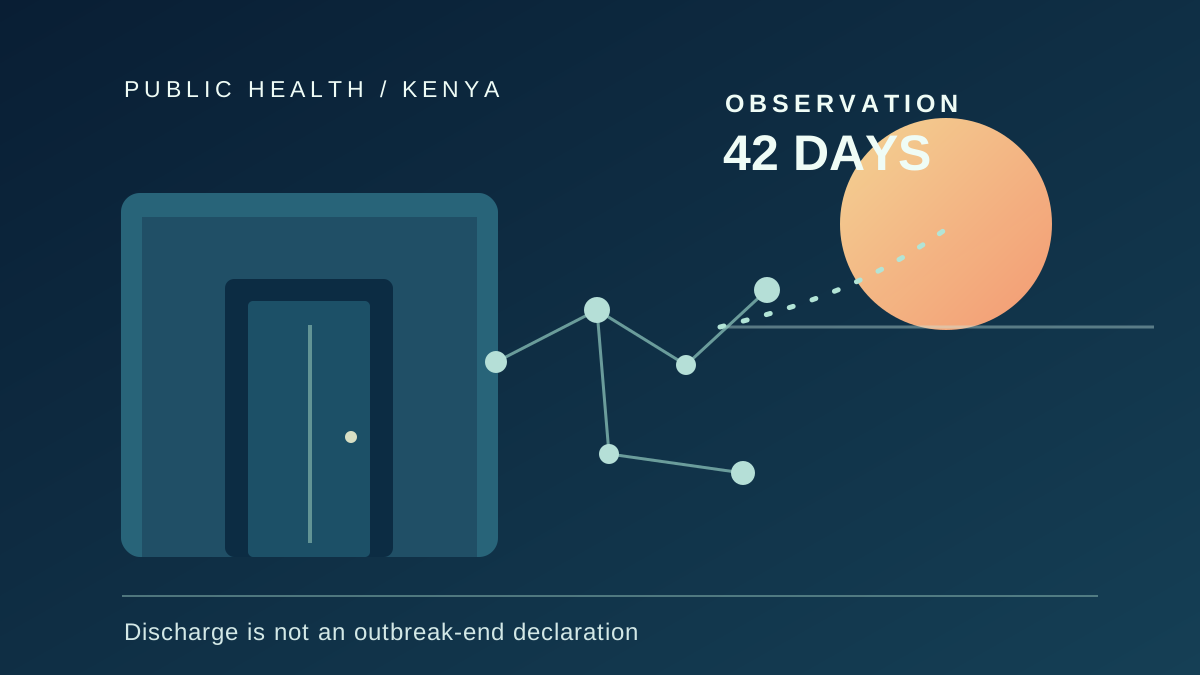
Kenya discharged its last patient being treated for Ebola on Wednesday, November 11, Health Minister Aden Duale announced, bringing the country's known patients out of treatment and opening a 42-day observation period. The news is a meaningful turning point for families and health workers who have faced a dangerous outbreak since early October. It is not an official declaration that Ebola has been eliminated from Kenya. The waiting period still has to pass without another detected infection, alongside continued surveillance. Reuters reported Duale's announcement, while the Associated Press independently confirmed the discharge and the start of the countdown.
The final discharge changes the timeline, not the official status
The contrast between those two milestones matters. Leaving an isolation ward is a clinical event: a patient has met discharge requirements. Ending an outbreak is a public-health determination about whether transmission appears to have stopped. According to AP, December 23 is the earliest prospective endpoint identified by the minister, assuming no new cases emerge. It is neither a guaranteed announcement date nor a claim that the surrounding region has become safe from new introductions. The government said preventive measures would remain in place through the monitoring period. [1][2]
Sources: Kenya releases last Ebola patient, starts 42-day countdown to disease-free status · Kenya discharges last Ebola patient, beginning countdown to Ebola-free declaration
Nine cases, two deaths and seven recoveries
The numerical picture is now straightforward, but its reporting dates require care. Reuters said on November 11 that Kenya had recorded nine confirmed infections since early October: two patients died and the other seven recovered. The initial case was a Kenyan man who had arrived from the Democratic Republic of the Congo and later died. AP identified his mother as the second person who died. The eight other confirmed cases were contacts of the original patient, rather than eight unrelated introductions into Kenya. [1][2]
Those final counts update, rather than overturn, an earlier World Health Organization snapshot. In its November 6 Disease Outbreak News, using data through November 3, WHO listed nine confirmed cases and two deaths, but only five recoveries at that point; two people were still receiving care. The five had been discharged on November 3. Later discharges brought the total number of recoveries to seven by November 11. Presenting the earlier recovery count without its cutoff date would make a settled chronology look like a numerical conflict. [3]
Sources: Kenya releases last Ebola patient, starts 42-day countdown to disease-free status · Kenya discharges last Ebola patient, beginning countdown to Ebola-free declaration · Ebola disease caused by Bundibugyo virus — Democratic Republic of the Congo, Kenya and Nigeria (DON625)
A traced cluster and the importance of contact monitoring
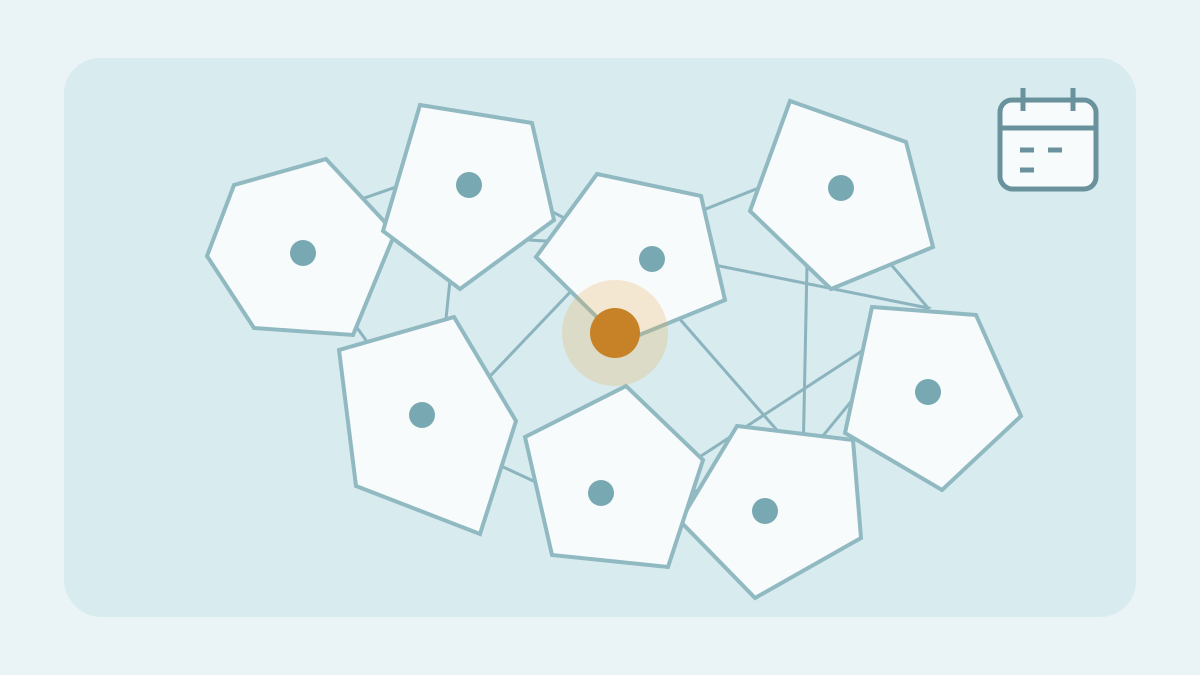
WHO described all eight secondary infections as part of one epidemiologically linked cluster: four family members of the first patient and four health and care workers. Every secondary patient was already in quarantine as a known contact when symptoms developed. That matters because isolating exposed individuals before symptoms progress can limit opportunities for onward transmission. But a documented connection among cases is a statement about the evidence available to investigators, not an absolute guarantee that no exposure was missed. WHO reported no evidence of transmission outside the cluster as of November 3. [3]
Kenya's response also involved more people than those who became ill. WHO counted 135 contacts cumulatively as of November 3; eight were subsequently confirmed as cases, while other contacts were followed or referred to public-health counterparts abroad. Reuters said the last 11 contacts were released from quarantine on November 11, and the ministry reported no new infections since October 19. Contact tracing, laboratory testing and protective procedures for staff therefore remain central to understanding the result. A contact is someone potentially exposed, not a confirmed patient. [1][3][4]
Sources: Kenya releases last Ebola patient, starts 42-day countdown to disease-free status · Ebola disease caused by Bundibugyo virus — Democratic Republic of the Congo, Kenya and Nigeria (DON625) · Twenty contacts of Kenya’s first Ebola case released from quarantine
What the 42 days are meant to establish
The 42-day period is twice the commonly cited maximum 21-day incubation period for Ebola disease. It is designed to give health authorities time to detect any remaining chain of transmission after the final known case has recovered. In its November 6 bulletin, WHO specifically said Kenya's countdown would begin once the last patient was discharged. That condition was reported as met on November 11, and both Reuters and AP described the countdown as beginning that day. The observation window is therefore an active phase of outbreak response, not a ceremonial interval. [1][2][3]
If another confirmed infection is found, officials would have to reassess the situation and the applicable timetable. Even without a new case, a declaration depends on the country's ability to investigate suspect illnesses, test samples, identify contacts and maintain credible reporting. There is also a distinction between having no hospitalized patients and having no possible future importations: travel and cross-border movement continue while the larger epidemic remains active elsewhere. The appropriate milestone for an official all-clear is a public-health declaration at the end of the process, not the discharge announcement alone.
Sources: Kenya releases last Ebola patient, starts 42-day countdown to disease-free status · Kenya discharges last Ebola patient, beginning countdown to Ebola-free declaration · Ebola disease caused by Bundibugyo virus — Democratic Republic of the Congo, Kenya and Nigeria (DON625)
Border precautions and the still-active regional outbreak
The wider outbreak is caused by Bundibugyo virus, a form of Ebola disease for which WHO says there is no licensed vaccine or specific approved treatment; timely supportive care and infection-control measures are important. Transmission remained intense in parts of the Democratic Republic of the Congo in WHO's November 6 account. AP reported on November 11 that Congolese authorities had recorded 11,042 infections and 5,387 deaths. Those are separately dated figures for Congo, not additions to Kenya's nine cases, and they may change as national and international reports are updated. [2][3]
Duale also announced, according to Reuters, that Kenyan citizens arriving from Congo would be required to undertake 21 days of quarantine. The precise implementation date, scope and any exemptions should be checked against a written government directive before those details are described as operative rules. WHO's November 6 guidance, meanwhile, advised against travel or trade restrictions imposed simply because a country was experiencing or responding to the outbreak. National entry measures and WHO recommendations are different policy statements, and reporting them together should not imply that they are identical. [1][3]
Sources: Kenya releases last Ebola patient, starts 42-day countdown to disease-free status · Kenya discharges last Ebola patient, beginning countdown to Ebola-free declaration · Ebola disease caused by Bundibugyo virus — Democratic Republic of the Congo, Kenya and Nigeria (DON625)
The next test is continued detection, not another discharge
The response extends beyond hospitals and border stations. AP reported that Saudi Arabia's October 30 suspension of visas affected Kenyans seeking employment in the Gulf, including domestic and hospitality workers, and that Kenyan authorities had asked Saudi Arabia to reconsider. Those external restrictions are decisions by another government, not evidence of fresh infections in Kenya. Their economic effects can outlast a hospital outbreak, especially for workers with travel arrangements or jobs pending. [2]
Kenya's immediate task is more measurable: sustain surveillance through the 42-day window and respond rapidly to any suspicious illness. The November 11 discharge gives the country an opportunity to reach a formal end-of-outbreak declaration, but the date remains conditional. The nine cases and two deaths also reveal the human cost behind the administrative milestones, particularly for relatives and health workers who became infected while close to the first patient. The most accurate description of Wednesday's news is substantial progress against a known transmission cluster—not proof that the broader Ebola threat has disappeared.
Sources: Kenya discharges last Ebola patient, beginning countdown to Ebola-free declaration