On the hill above Kabul’s old city, the defensive walls of Bala Hissar conceal a history that extends well beyond military conquest. A November 9 Associated Press report describes archaeologists uncovering coins, ceramics, religious remains and features identified as part of a Mughal palace while workers stabilise the damaged fortress. The most important distinction is between the date of that report and the age of the work: excavations and conservation have been under way for years. A newly published scientific study of pottery from the site also offers a detailed view of how researchers are beginning to make sense of its buried layers.
A citadel that was never only a military structure
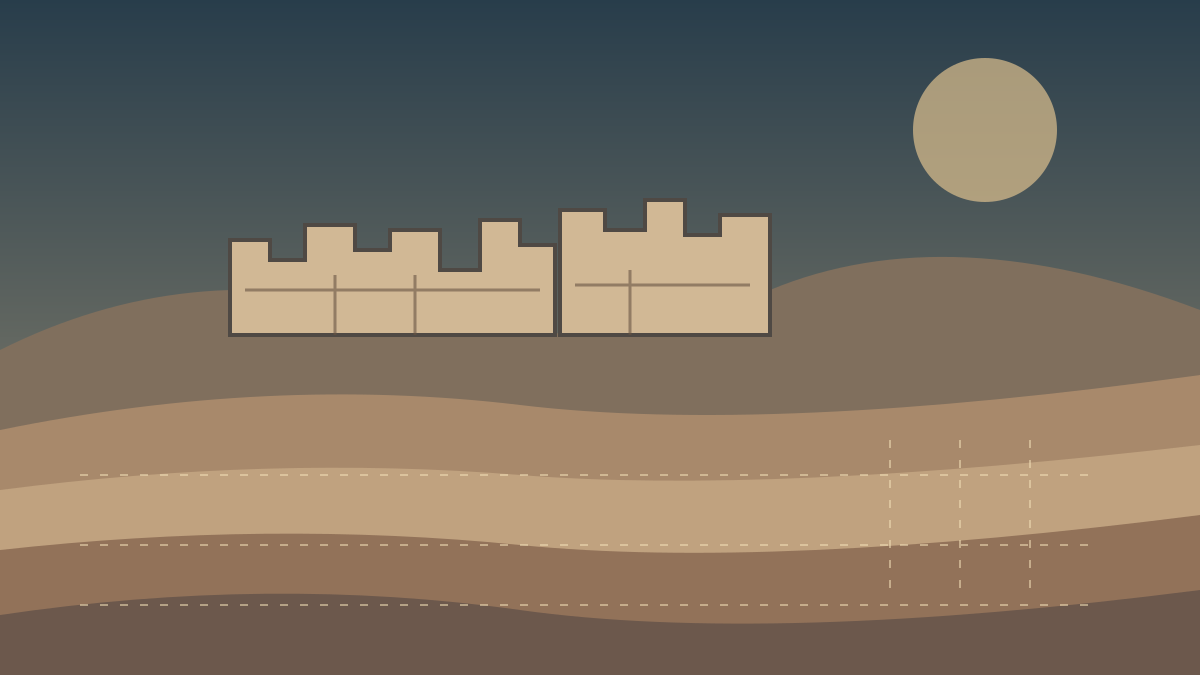
Bala Hissar means “High Fort” in Dari. Built across the slopes above Kabul’s old city, its position helped successive rulers watch routes into the capital. Over centuries, the site served as a religious settlement, royal residence, administrative centre, arsenal, prison and military garrison. Yet there is no single, intact ancient fortress to uncover. The Aga Khan Development Network says most surviving above-ground ruins date from the eighteenth and nineteenth centuries, with a smaller number of sixteenth-century Mughal features. What visitors can see today is only the latest visible part of a much older landscape.
The distinction is fundamental to archaeology. A wall from one period may stand over a house, monastery or courtyard from another; layers can be damaged or displaced by later construction. A peer-reviewed study published in August 2026 provides a more precisely documented example. Excavation in Trench 3, Zone 2, identified five main architectural phases spanning approximately the fifth to sixteenth centuries CE. The researchers also describe older occupation levels elsewhere on the larger site, extending back to about the first century BCE. Those findings document a long sequence of occupation, not a confirmed construction date for the surviving walls.
Sources: Kabul's Bala Hissar fortress offers a glimpse into 2 millennia of history · Restoration in Kabul — Conservation at the Bala Hissar Citadel · Talc-Tempered Pottery From Bala Hissar, Kabul: An Analytical Study
What archaeologists are finding
In field reporting published on November 9, the Associated Press described excavations in five trenches. The finds include ancient coins, fragments of Buddhist statues, glazed Islamic ceramics, oil lamps, large quantities of pottery and structural remains associated with homes, monasteries and palaces. Archaeologist Babak Rafiei-Alavi also described what the team identified as part of a Mughal palace, including murals, a throne-like feature and a star-shaped pool cut into rock. These discoveries were accumulated over an ongoing programme: the publication date does not mean each object or structure was uncovered on November 9.
The material evidence answers different questions at different levels of certainty. Pottery can tell researchers about cooking, craft and supply; architectural traces suggest how space was occupied or repurposed. In the 2026 Archaeometry study, researchers examined talc-tempered cooking-ware sherds and found indicators of repeated heating. Their laboratory results suggest that some raw materials probably came from deposits southwest of Kabul. That is a published analysis of a particular ceramic assemblage, not a scientific dating of the palace, monastery or every object reported by AP. A comprehensive publicly available catalogue of all five trenches was not established in this review.
Sources: Kabul's Bala Hissar fortress offers a glimpse into 2 millennia of history · Talc-Tempered Pottery From Bala Hissar, Kabul: An Analytical Study
Why preserving the walls is part of the research
Conservation and excavation at Bala Hissar cannot be separated. Crumbling towers and unstable walls endanger both people and the archaeological deposits beneath them. The Aga Khan Trust for Culture announced a programme in 2020 to protect the registered national monument and eventually create a public archaeological park. Its announcement records emergency structural stabilisation starting in 2017. AP describes planning that began in 2017 and broader on-site work from 2018, followed by surveys, documentation and repairs. These are stages of the same long-term effort, not evidence of a new project launched this November.
According to AP’s interviews, the teams have used ground-penetrating radar and three-dimensional laser scans to record the structures. Some sections of defensive wall are being rebuilt with locally sourced rock, with the additions intentionally made distinguishable from surviving historic masonry. Metal supports have also been installed around a badly damaged tower. The purpose of such work is not simply to make the fortress appear complete in photographs; it is to keep vulnerable material standing while researchers record what survives. AP also reports plans to train Afghan archaeology students, an investment in the skills needed after individual repair campaigns end.
Sources: Kabul's Bala Hissar fortress offers a glimpse into 2 millennia of history · Bala Hissar Citadel in Kabul, Afghanistan to be restored by AKTC
Conflict, destruction and a difficult political setting
The citadel’s visible condition is the product of repeated destruction and reuse. British troops demolished substantial parts of the complex in 1879 after the killing of their envoy and entourage, AP reports. More recent wars, military occupation and neglect compounded that damage. The current preservation effort predates the Taliban’s return to power in August 2021. Fieldwork involving the French Archaeological Delegation stopped around the political transition, while the Aga Khan programme continued, with extensive local work after 2022. The 2026 pottery study separately identifies archaeological work conducted by Afghan teams in coordination with the country’s Archaeological Institute during 2022–2026.
The present Taliban administration says it supports protection of historical monuments, a position reported by AP and reflected in an April statement from Afghanistan’s Ministry of Information and Culture. Those assurances are attributable government statements, not an independent assessment of preservation across the country. In 2001, Taliban forces destroyed the monumental Bamiyan Buddhas and damaged museum collections. Both facts belong in an account of present-day heritage work: tangible conservation at Bala Hissar is happening, but neither the existence of repairs nor official expressions of support settles questions about research access, professional independence or future funding.
Sources: Kabul's Bala Hissar fortress offers a glimpse into 2 millennia of history · Talc-Tempered Pottery From Bala Hissar, Kabul: An Analytical Study · The Minister of Information and Culture visited the laboratory, antiquities exhibition, museum, and restoration areas at Kabul Bala Hissar
What a public archaeological park could mean for Kabul
The project’s proposed end point is a publicly accessible archaeological park. The Aga Khan Trust for Culture described this ambition in 2020, and AP’s November report says the vision includes landscaped grounds, restaurants and a museum. If delivered, a managed historic landscape could offer Kabul residents places for learning, recreation and encounters with material from several periods of the city’s past. It might also create work for conservators, educators and craftspeople. Those remain intended outcomes: neither the 2020 announcement nor the 2026 reporting establishes that the entire complex has been restored or that the proposed public park is open.
There is already an on-site facility described as a museum, but its status needs careful wording. In April 2026, Afghanistan’s Ministry of Information and Culture reported that the minister visited a laboratory, an antiquities exhibition and a museum within Bala Hissar. The ministry said finds are examined in the laboratory, kept locally for a period and later transferred to the National Museum. That account documents facilities and an official explanation of the process. It does not establish public opening hours, general visitor access, a verified catalogue of transferred objects or an independent audit of collections. Those questions matter as much as the architecture of the future park.
Sources: Kabul's Bala Hissar fortress offers a glimpse into 2 millennia of history · Bala Hissar Citadel in Kabul, Afghanistan to be restored by AKTC · The Minister of Information and Culture visited the laboratory, antiquities exhibition, museum, and restoration areas at Kabul Bala Hissar
The unfinished work is the real story
Bala Hissar’s importance lies in the evidence of different people using and reshaping the same terrain over time. The excavations are not a discovery of one lost civilisation, nor do they overturn the record of Afghanistan’s history with a single object. They allow researchers to connect everyday objects, religious spaces, fortifications and royal structures within a shared landscape. The ceramic study shows how much more can be learned from measured stratigraphy and laboratory analysis than from a photograph of an extraordinary find. For the reported Mughal features, detailed specialist publication would help readers distinguish secure identification and dating from a provisional interpretation made in the field.
The most meaningful next updates will be published excavation records, properly catalogued finds, documented structural repairs and transparent information about which spaces people can visit. Evidence of conservation progress should be assessed independently of promises about future attractions. For now, the grounded conclusion is substantial enough: long-running work at Kabul’s Bala Hissar is protecting damaged structures and revealing previously buried parts of the city’s past. A completed fortress restoration, a fully opened archaeological park or a definitive account of every excavation layer would all be claims beyond the evidence currently available.
Sources: Kabul's Bala Hissar fortress offers a glimpse into 2 millennia of history · Restoration in Kabul — Conservation at the Bala Hissar Citadel · Bala Hissar Citadel in Kabul, Afghanistan to be restored by AKTC · Talc-Tempered Pottery From Bala Hissar, Kabul: An Analytical Study · The Minister of Information and Culture visited the laboratory, antiquities exhibition, museum, and restoration areas at Kabul Bala Hissar