India has moved a narrowly defined category of lithium-ion battery waste from freely exportable to prohibited, seeking to keep a recoverable source of critical minerals inside the country. The change is immediate, but its reach is set by one customs code—not every battery, every battery component or every processed metal. The harder industrial question begins after the border: whether domestic recyclers can turn retained black mass into refined materials at scale, under the environmental rules that govern the waste.
A change in one export line
The Directorate General of Foreign Trade (DGFT), part of the Department of Commerce, issued Notification No. 49/2026-27 on November 10. It changed the export policy for goods under ITC(HS) code 85491400 from “Free” to “Prohibited”, with immediate effect and until further orders. The Ministry of Commerce and Industry confirmed the change in a Press Information Bureau release the following day. The legal trigger is therefore a change in the export status of a defined tariff line, not a general announcement about the battery industry.
That line covers waste and scrap of primary cells, primary batteries and electric accumulators, including spent cells and batteries, when the material is unsorted and does not contain lead, cadmium or mercury. The notification specifically identifies the goods as lithium-ion battery black mass. It does not say that all lithium-ion batteries, all battery scrap, every processed battery material or refined mineral products are prohibited from export. Classification still matters: the measure attaches to the specified code and description, not to every product associated with battery recycling.
Sources: Notification No. 49/2026-27: Amendment in Export Policy of Waste and Scrap of Primary Cells, Primary Batteries and Electric Accumulators (Lithium-Ion Battery Black Mass) under ITC (HS) 85491400 · DGFT prohibits export of Lithium-Ion Battery Black Mass to strengthen domestic recycling and critical mineral recovery · Centre bans export of battery waste, including lithium-ion black mass · Government bans export of lithium-ion battery waste days after new scheme on critical minerals processing
What black mass is—and what it is not
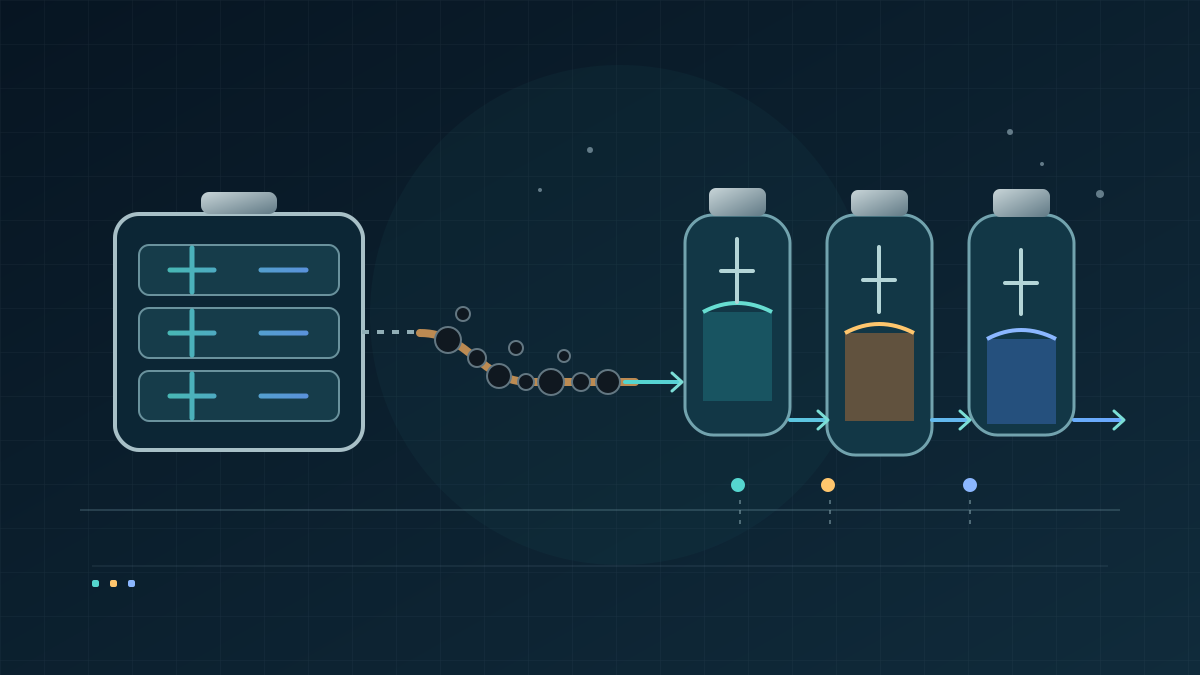
Black mass is an intermediate material produced when end-of-life lithium-ion batteries or battery-manufacturing waste are dismantled, crushed and shredded. The Central Pollution Control Board’s January 2025 operating procedure describes it as material generated after physical separation of components such as copper, plastics, aluminium and steel. It consists mainly of anode and cathode material, and its composition can vary with the type of battery being processed.
That variability matters. Black mass is not a single refined metal or a finished battery ingredient with one fixed composition. It is a feedstock that must undergo further processing. The CPCB procedure describes hydrometallurgical steps including leaching, filtration, purification and solvent extraction to recover compounds of metals such as cobalt, manganese, nickel and lithium. The export rule retains this intermediate material in India; it does not itself perform the chemical work needed to recover those materials.
Sources: DGFT prohibits export of Lithium-Ion Battery Black Mass to strengthen domestic recycling and critical mineral recovery · Standard Operating Procedure and Checklist of Minimal Requisite Facilities for Utilization of Hazardous Waste under Rule 9: Utilization of Black Mass
Why the government wants the feedstock at home
The government’s stated case is that exporting black mass sends a valuable secondary resource abroad before its critical minerals are recovered. In its November 11 release, the Commerce Ministry said Indian recycling and refining units had faced inadequate feedstock and that some domestic recyclers had, in certain cases, imported material to meet their needs. Those are the government’s explanations for the measure, not independently measured outcomes of the new restriction.
The policy is intended to make more domestically generated black mass available to Indian recyclers and refiners, supporting recovery of lithium, cobalt, nickel and other critical minerals and reducing reliance on imports. The notification itself does not provide export volumes, production figures, market values or estimates of how much material will be retained. Nor does it quantify how much additional metal domestic processors could recover. Those questions will require operating data after the rule takes effect.
Sources: DGFT prohibits export of Lithium-Ion Battery Black Mass to strengthen domestic recycling and critical mineral recovery · A strong push for critical mineral extraction from recycling · Centre bans export of battery waste, including lithium-ion black mass
The transition clause is not a blanket contract exemption
The notification says the transitional arrangements in paragraph 1.05 of the Foreign Trade Policy 2023 apply. That reference matters, but it should not be read as a promise that every order or contract signed before November 10 can still be exported. The policy says exportability is governed by the rules in force on the date of export and identifies the shipping bill as a key document for determining that date.
The same paragraph provides a specific route for exports on or after a change from “free” to “prohibited” where the exporter had a commitment through an irrevocable commercial letter of credit opened before the restriction. Any permitted quantity is limited to the remaining quantity, value and period under that credit, and the credit must be registered with the jurisdictional DGFT Regional Authority within 15 days of the restriction. The notification does not separately explain how an individual contract or shipment should be treated. Exporters should check the official text and obtain case-specific compliance advice rather than assume that a purchase order, advance payment or goods already at port is sufficient.
Sources: Notification No. 49/2026-27: Amendment in Export Policy of Waste and Scrap of Primary Cells, Primary Batteries and Electric Accumulators (Lithium-Ion Battery Black Mass) under ITC (HS) 85491400 · DGFT prohibits export of Lithium-Ion Battery Black Mass to strengthen domestic recycling and critical mineral recovery · Foreign Trade Policy 2023, Chapter 1: Legal Framework and Trade Facilitation
A recycling incentive cannot substitute for refining capacity
The export measure sits alongside a broader government effort to build domestic critical-mineral recycling. On September 3, 2025, the Union Cabinet approved a ₹1,500 crore incentive scheme as part of the National Critical Mineral Mission. The scheme is designed to support the separation and production of critical minerals from secondary sources, including spent lithium-ion batteries and electronic waste. Its stated focus is the recovery of minerals, not simply the production of black mass.
The Ministry of Mines said in October 2025 that India’s capacity to process black mass or powder was limited and that few companies were carrying out end-to-end recycling from battery scrap to metal extraction. It said the incentive scheme was meant to support the part of the value chain that actually extracts critical minerals. That is the central industrial test for the export restriction: keeping feedstock in the country may help processors obtain material, but it does not by itself create the plants, technical capability, capital, environmental controls or reliable operations needed to refine it.
Sources: Cabinet approves Rs.1,500 crore Incentive Scheme to promote Critical Mineral Recycling in the country · A strong push for critical mineral extraction from recycling
What would show whether the policy works
The first evidence will be administrative: how customs authorities classify shipments under code 85491400, how DGFT handles questions about the transitional clause, and whether additional guidance is issued. The next evidence must come from the recycling chain itself. Relevant measures would include the amount of black mass received by authorised domestic facilities, the share that proceeds to metal recovery, and verified output of usable mineral compounds—not simply the quantity of waste retained at the border.
Environmental compliance is part of that test, not a side issue. The CPCB procedure treats black mass as hazardous waste and sets out conditions for authorised utilisation and monitoring. More feedstock is not automatically a public benefit if handling, storage and processing are unsafe or if material accumulates without effective recovery. India has changed where a specified battery-recycling intermediate may be exported. Whether that becomes stronger domestic mineral supply will depend on what happens next inside the country.
Sources: Notification No. 49/2026-27: Amendment in Export Policy of Waste and Scrap of Primary Cells, Primary Batteries and Electric Accumulators (Lithium-Ion Battery Black Mass) under ITC (HS) 85491400 · DGFT prohibits export of Lithium-Ion Battery Black Mass to strengthen domestic recycling and critical mineral recovery · Foreign Trade Policy 2023, Chapter 1: Legal Framework and Trade Facilitation · Standard Operating Procedure and Checklist of Minimal Requisite Facilities for Utilization of Hazardous Waste under Rule 9: Utilization of Black Mass · A strong push for critical mineral extraction from recycling