When a coding assistant offers a long list of AI models, developers must decide whether a simple task needs an expensive model and whether switching midway will lose useful context. At GitHub Universe on October 28, 2026, GitHub made Copilot Fusion generally available as a different approach: choose a task effort level and let the runtime select one or more models. The idea is practical, but the economic promise depends on what work is measured, which models are used and how the bill is calculated.
Fusion is a routing system, not a new foundation model
GitHub's launch announcement combines two earlier efforts: automatic selection of a model and orchestration of multiple models within one task. A developer chooses Fusion in supported Copilot clients rather than selecting a single named model for the entire interaction. The system is supposed to choose a suitable approach depending on the complexity of the request.
That changes the product comparison. A direct comparison between Fusion and a single-model chat experience can include different numbers of inference calls and review steps, even when the interface shows one answer. The result depends on orchestration policy as well as the individual models underneath it. GitHub documents the routing behavior and warns that its model pool can change over time.
Sources: Route and orchestrate models with GitHub Copilot Fusion · About GitHub Copilot Fusion · GitHub Universe 2026: Evolving every layer of the stack
Three paths: single, cascade and critique
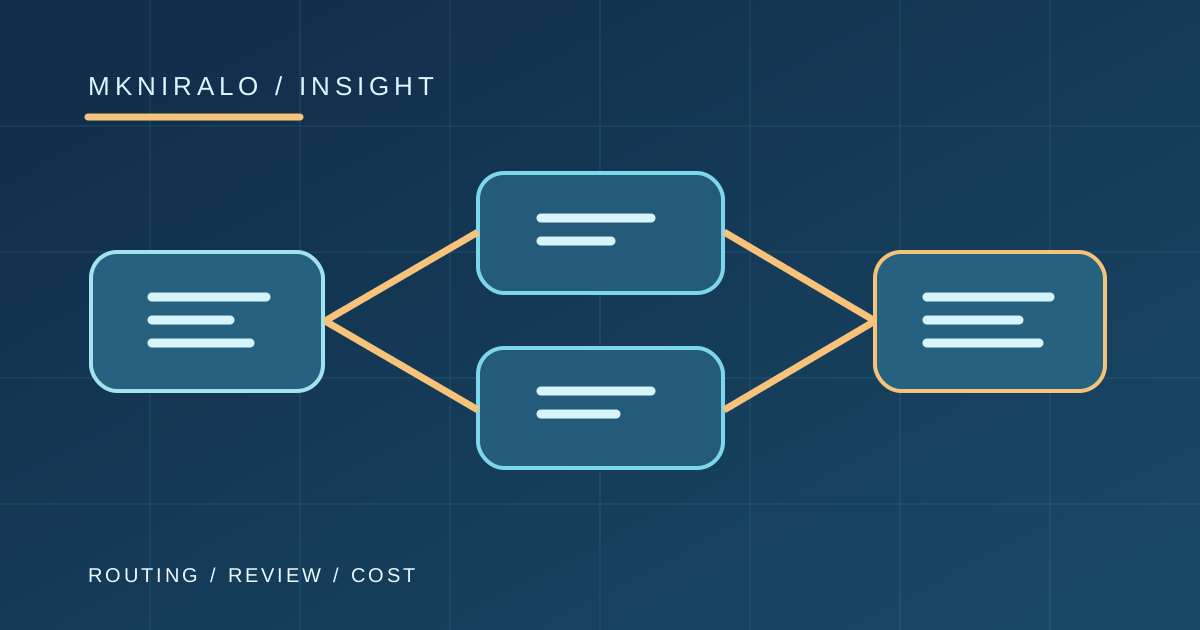
In the single pattern, one selected model handles the task. In cascade, a more economical model tries first and a separate check decides whether a stronger attempt is warranted. In critique, an initial answer is examined by other model calls before the user receives the revised result. GitHub presents these as alternative execution patterns chosen at runtime, not as guarantees that every prompt receives the same review.
The trade-off is important. A straightforward formatting change may gain little from a second opinion. A risky code modification might benefit from scrutiny, but a reviewer that shares the same blind spot can still miss a problem. Multi-model critique is an aid to the developer's review process, not a replacement for tests, repository permissions or an accountable merge decision.
Sources: Route and orchestrate models with GitHub Copilot Fusion · About GitHub Copilot Fusion
The benchmark is evidence, not a universal price tag
GitHub reported that Fusion Max scored 60 on the Artificial Analysis Coding Agent Index, two points behind the referenced Claude Code configuration. It said the result used roughly half the average API cost per task and materially less time and tokens. VentureBeat's independent coverage discusses the underlying evaluation and the launch comparisons. These measurements are about a particular benchmark configuration and a specific competitor, not every customer's subscription bill.
Real costs depend on task difficulty, model choices, retries, context size and the rate charged for each contributing model. A team that mostly performs quick file edits might see different economics from one that routinely delegates complicated multi-repository repairs. An impressive average can hide expensive outliers; teams should watch the per-task distribution rather than treating a headline percentage as a guaranteed saving.
Sources: Route and orchestrate models with GitHub Copilot Fusion · GitHub Copilot Fusion mixes models to achieve near-Opus coding performance at half the per-task cost
What Standard, High and Max actually change
Fusion Standard aims to balance speed, cost and capability for ordinary requests. High uses additional reasoning or review when warranted for substantial work; Max prioritizes demanding tasks and can call stronger models. The developer still chooses how much effort the request deserves, even when the runtime chooses the specific model. GitHub says Fusion works across supported Copilot clients and plans, although individual features depend on the environment and relevant policies.
Billing is not a flat fee for a magic new model. GitHub says the user is charged for the models Fusion invokes at their applicable rates. Its documentation describes a temporary 30% discount for paid Copilot users through November 30, 2026. Any comparison should therefore distinguish introductory discounts from underlying model consumption and check the account's credit and policy settings.
Sources: Route and orchestrate models with GitHub Copilot Fusion · About GitHub Copilot Fusion
Local models add a privacy question, not an offline guarantee
GitHub separately announced an experimental preview in which Fusion Standard can route to eligible local models. Managed setup is described for supported Windows devices, with a narrower set of app configurations; manual local-model providers are supported in certain other environments. Local routing requires the experimental feature to be enabled and the model to be configured correctly. It is not an automatic option for every Copilot installation.
The company explicitly notes that a local model choice does not make the entire Copilot session offline: routing decisions may still involve cloud services. Local inference can change where part of the processing happens, but developers should separately investigate telemetry, model eligibility, data handling and the security posture of their own local server. 'Runs locally' is not a sufficient privacy policy.
Sources: About GitHub Copilot Fusion · GitHub Copilot Fusion now supports selection of local models
How a team should evaluate Fusion without guessing
Begin with a controlled collection of the team's own tasks: a small refactor, an ambiguous bug, a test fix, and a change that must stop for approval. Give each task a known success criterion. Record final patch quality, test failures, total tokens or AI credits, elapsed time, and how often a second model was invoked. Use the same repository version and review standards for a comparison against manually selected models.
Also inspect what the agent changed before switching modes. GitHub's documentation cautions that discarded drafts may leave workspace edits behind; orchestration does not automatically restore every intermediate file state. The most durable lesson from Fusion is not that developers can forget model trade-offs. It is that selection and review can be delegated—but their outcomes, spending and permissions still need to be observable.
Sources: About GitHub Copilot Fusion · GitHub Copilot Fusion mixes models to achieve near-Opus coding performance at half the per-task cost · GitHub Universe 2026: Evolving every layer of the stack