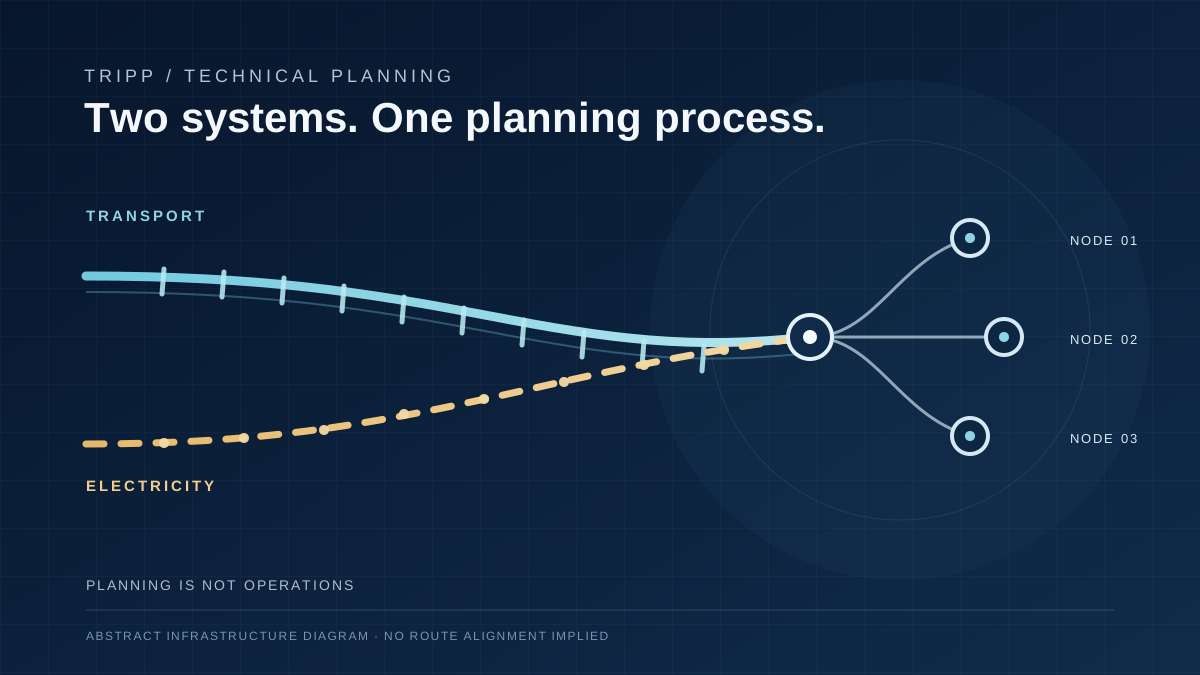
A joint statement published by Armenia’s Foreign Ministry on 7 November says the United States, Armenia and Azerbaijan have launched the first two trilateral technical planning groups for the Trump Route for International Peace and Prosperity (TRIPP). One will focus on transportation; the other on electricity transmission. The announcement is a concrete diplomatic step, but it does not say that a railway has opened, construction has begun or a final route has been selected. The distinction matters because major legal, engineering and financing steps remain outstanding.
What the three governments actually launched
The statement names the officials who launched the format: U.S. Assistant Secretary of State Brendan Hanrahan, Armenian Deputy Foreign Minister Vahan Kostanyan and Azerbaijani Deputy Foreign Minister Elnur Mammadov. TRIPP is intended to connect mainland Azerbaijan with Nakhchivan through Armenia’s southern Syunik region. The forum will bring together policymakers and technical experts from the three countries; the first two groups will focus on transportation and electricity transmission.
The governments describe the groups as a step toward resolving technical issues and connecting TRIPP with other regional infrastructure. But the statement gives no membership list, schedule, work programme, budget, route map or construction timetable. It also does not specify a venue or say that the launch involved a physical meeting. What is confirmed is a new trilateral planning mechanism with two initial workstreams—not the completion of the work those groups are meant to do.
Sources: Joint Statement by the United States, Armenia, and Azerbaijan on the Launch of Trilateral Technical Planning Groups to Advance the Trump Route for International Peace and Prosperity (TRIPP) · U.S., Armenia, Azerbaijan Launch Trilateral Groups To Advance TRIPP
Technical preparation preceded the announcement
The new format follows earlier contacts. RFE/RL’s Armenian Service reported that Armenian and Azerbaijani specialists met in Goris about a month earlier to discuss electricity transmission. In late October, an Armenian delegation led by Deputy Prime Minister Mher Grigorian visited the planned TRIPP area to examine possible infrastructure routes. Grigorian said the visit was intended to help organize design work.
On 2 November, Prime Minister Nikol Pashinyan said Armenia would begin commissioning designs for a railway, highway and electricity lines before the development company exists, then transfer completed work to it. He identified the Nrnadzor–Karchevan railway and associated road and power infrastructure as part of the plan; oil and gas pipelines, he said, would be discussed later. Commissioning designs is not the same as completing them, awarding construction contracts or starting physical construction.
Sources: Armenia begins preparatory work on TRIPP infrastructure project, Pashinyan says · U.S., Armenia, Azerbaijan Launch Trilateral Groups To Advance TRIPP
What the May framework agreement sets out
The Armenia–U.S. framework agreement, published by Armenia’s Foreign Ministry on 26 May 2026, traces TRIPP to the 8 August 2025 Washington declaration signed by Armenia’s prime minister and Azerbaijan’s president and witnessed by the U.S. president. Its preamble dates the U.S.–Armenia Implementation Framework to 13 January 2026, not 14 January. Armenia’s parliament ratified the framework on 28 October by 63 votes to 32, JAMnews and ARKA reported.
The agreement defines the TRIPP Development Company (TDC) as a joint venture to be incorporated in Armenia as a joint-stock company. A U.S. entity, TDC US, is to be incorporated in Delaware as a wholly owned subsidiary of the U.S. International Development Finance Corporation (DFC). TDC US would hold a 74% controlling stake in the TDC; Armenia would hold 26%. These are proposed corporate ownership terms, not a transfer of Armenian territory or sovereign authority.
The initial development-rights term is 49 years. The parties may mutually agree to extend it for another 50 years, when Armenia’s stake is to rise to 49%. The agreement envisages exclusive land-use and development rights for the TDC once it is incorporated and project areas are determined. Those areas are to be decided by the parties with reference to feasibility and design studies.
Sources: Framework Agreement between the Republic of Armenia and the United States of America on Strategic Cooperation Concerning the Trump Route for International Peace and Prosperity (TRIPP) · Armenian parliament ratifies framework agreement on Trump Route (TRIPP) project · Armenian-US agreement on TRIPP project ratified by Armenian parliament
The development company is still a step to be completed
The framework describes the TDC as a company to be incorporated, not an existing operator. It says a charter and shareholders’ agreement are intended to establish and govern it. During the October ratification debate, Foreign Minister Ararat Mirzoyan said those documents still needed to be finalized, ARKA reported.
On 5 November, NEWS.am reported that the government had proposed an extraordinary parliamentary sitting for 12 November to consider a draft bill amending the Law on Joint-Stock Companies and related legislation. The package would establish a permanent legal framework for companies set up under ratified international agreements in which the state holds at least 25%. The sitting and amendments remained proposals as of 7 November; they do not mean the TDC has been incorporated.
The framework also says the United States intends to seek authorization to establish the TDC, including notifying Congress and obtaining DFC board approval. Article 11 makes entry into force conditional on an exchange of notes confirming that both parties have completed their internal procedures; Armenia’s parliamentary vote alone does not establish that this condition has been met.
Sources: Framework Agreement between the Republic of Armenia and the United States of America on Strategic Cooperation Concerning the Trump Route for International Peace and Prosperity (TRIPP) · Armenian-US agreement on TRIPP project ratified by Armenian parliament · Armenian government proposes extraordinary parliamentary session on TRIPP
Ownership is not the same as sovereignty
The 74–26 split answers a corporate question: who would own the planned development company. The framework separately says Armenia retains full sovereignty, territorial integrity and jurisdiction over TRIPP areas inside its territory. Article 8 says Armenia retains sovereignty and jurisdiction over its borders and customs operations, including the right to maintain a physical presence at border-control facilities.
Armenian authorities would remain responsible for security, border control, customs and immigration, taxes and duties, government data systems and state oversight. The agreement contemplates a front-office/back-office approach and allows private operators to provide customer-facing services at relevant crossings, but only with mutual consent between Armenia and the TDC. It does not describe the border as being handed to the company.
The framework nevertheless creates a substantial long-term development structure: exclusive rights over designated areas, project subsidiaries and reserved decisions requiring shareholder consent. It also contemplates specified deviations from Armenian company, procurement and public-private-partnership laws. The future charter and shareholders’ agreement will therefore matter. The accurate distinction is that sovereignty is expressly retained while corporate and development arrangements remain to be completed.
Sources: Framework Agreement between the Republic of Armenia and the United States of America on Strategic Cooperation Concerning the Trump Route for International Peace and Prosperity (TRIPP) · Armenian parliament ratifies framework agreement on Trump Route (TRIPP) project · Armenian-US agreement on TRIPP project ratified by Armenian parliament
Planning is not delivery
The framework’s financing language is conditional. The United States intends to provide or help secure financing, subject to available funds, applicable requirements or commercial terms involving public and private investors. The text does not set a construction budget or guarantee committed capital. No fixed project budget or completed financing package is identified in the sources reviewed.
The route is not fully specified either. The framework leaves implementation areas to be mutually determined after feasibility and design work. Pashinyan has identified a proposed railway section and associated road and power infrastructure, while the new joint statement announces planning groups but no final alignment, engineering design, construction contract or opening date. TRIPP is not an operating corridor.
The next visible milestones are procedural: the groups’ technical work, the proposed 12 November parliamentary consideration of company-related bills, completion of the TDC’s legal instruments and the design work Armenia says it intends to commission. Each could move the project forward. None means trains are running, power is flowing or cross-border transit has begun.
Sources: Joint Statement by the United States, Armenia, and Azerbaijan on the Launch of Trilateral Technical Planning Groups to Advance the Trump Route for International Peace and Prosperity (TRIPP) · Framework Agreement between the Republic of Armenia and the United States of America on Strategic Cooperation Concerning the Trump Route for International Peace and Prosperity (TRIPP) · Armenian government proposes extraordinary parliamentary session on TRIPP · Armenia begins preparatory work on TRIPP infrastructure project, Pashinyan says · U.S., Armenia, Azerbaijan Launch Trilateral Groups To Advance TRIPP