An assistant that recommends a cheaper broadband plan is useful. An assistant that cancels the old contract, signs up for a replacement and moves money is making decisions with consequences. On 30 October 2026, four UK regulators issued a joint statement about the emerging market for personal AI agents. Their message points to an overlooked design problem: when the software starts acting for a person, the boundaries of permission, transparency and remedy become part of the product—not optional settings to add later.
What changed on 30 October?
The Digital Regulation Cooperation Forum published a joint statement from the Competition and Markets Authority, Financial Conduct Authority, Information Commissioner's Office and Ofcom. It describes how the regulators intend to coordinate as personal AI agents become more common. The statement is a regulatory signal, not the announcement of a new single AI-agent law.
The CMA's consumer research page was also updated on 30 October. The underlying work explains a possible shift from asking software for answers toward delegating tasks across services. It repeatedly distinguishes limited deployments in today's market from more ambitious future scenarios. That distinction matters: a description of what agents might eventually accomplish is not evidence that most consumers already rely on fully autonomous shopping assistants.
Read together, the documents frame agentic commerce as both an opportunity to reduce everyday hassle and a reason to examine who controls the transaction when an automated choice goes wrong.
Sources: Protecting people and businesses in an agentic economy: joint statement · Agentic AI and consumers
Why a recommendation and a purchase are different
A search result can be ignored. A purchase may create a payment, delivery obligation or contract. The software therefore crosses a meaningful boundary when it changes from explaining an option to committing the user to it. Consider a household that asks an agent to find a lower electricity tariff. A comparison is reversible; a switch that triggers cancellation terms or a missed discount may not be.
The practical question is not whether an AI model can generate a convincing answer. It is whether the surrounding product knows which decisions are permitted, what the consumer meant by 'cheaper', whether fees and service quality were included, and when a human must confirm the action.
The CMA gives examples involving subscriptions, service-provider switches and purchases. These are illustrative use cases, not claims that any named product has passed a regulator's reliability test.
Sources: Agentic AI and consumers · Using AI agents: complying with consumer law
Who benefits when the agent makes a choice?
An AI shopping assistant might have more than one incentive. Its user wants a suitable deal; its operator may earn affiliate fees, prefer particular partners or optimise the likelihood of completing a transaction. The choice could look neutral to a consumer even when the range of products or ranking rules is constrained.
The regulator's analysis raises the risk of hidden steering and overly personalised persuasion. A credible assistant should explain when its search excludes providers, which commercial relationships affect recommendations and what costs were considered. This is especially important if it presents one option as best without showing how the conclusion was reached.
There is also a competition question. If many merchants and intermediaries rely on automated pricing and ranking systems, market outcomes may change in ways a single shopper cannot see. Such effects are a risk regulators are studying; they are not proof that a particular AI agent is colluding or deceiving users.
Sources: Agentic AI and consumers · Using AI agents: complying with consumer law
The permissions problem is bigger than a checkbox
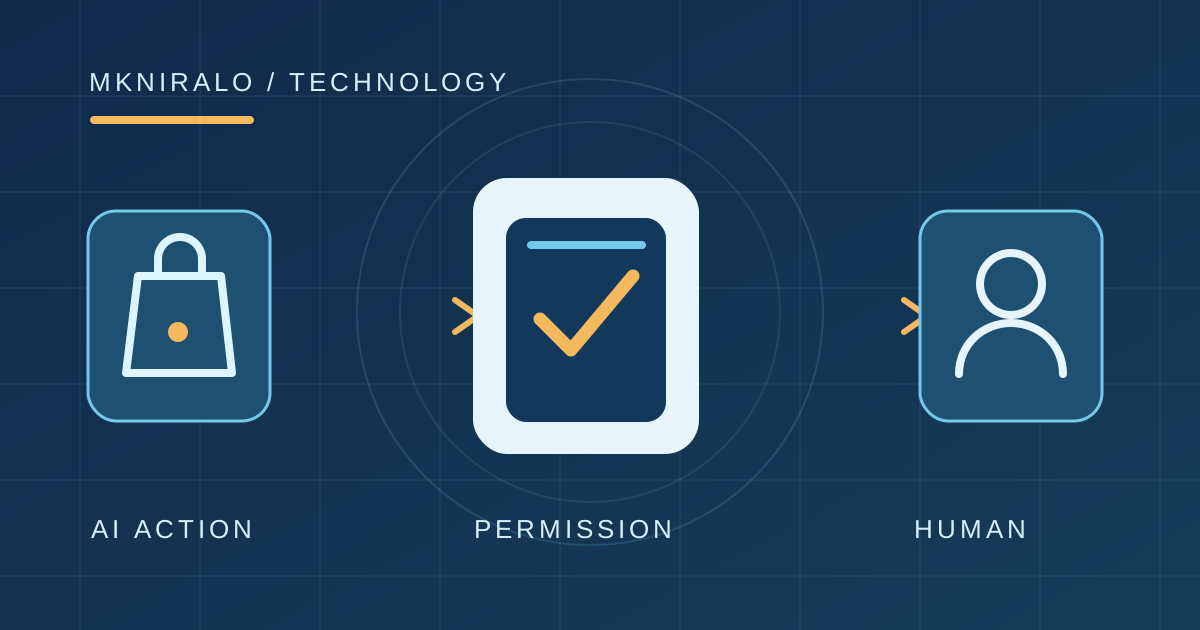
Permission should be tied to an action and its consequences. Authorising an agent to monitor a price is different from permitting it to spend money, upload financial details or end a contract. Useful boundaries include a maximum payment, an approved merchant list, a time limit and mandatory confirmation before an irreversible change.
Privacy rules also enter the picture because an assistant can combine details from accounts and services that were previously separate. The ICO has an open call for evidence on agentic AI that examines security, transparency, accountability, automated decisions, fairness and lawful processing. Its consultation remains open until 20 November 2026, according to the ICO's published timetable.
Our suggested design rule is simple: show the intended action before it happens, record why the system chose it and preserve a way for the consumer to halt future actions. That is an editorial recommendation, not a newly mandated technical specification.
Sources: Protecting people and businesses in an agentic economy: joint statement · Agentic AI and consumers · Agentic AI call for evidence
What happens when the agent is wrong?
The difficult cases are ordinary ones: a product ordered twice, a subscription cancelled too early, a refund request mishandled, or an agent choosing a plan with a fee hidden in the small print. A useful system must support investigation and correction after the event, not merely apologise in fluent language.
The CMA's guidance says businesses remain responsible for meeting consumer-protection obligations when they use AI agents. It recommends attention to system training, actual performance, complaints and human oversight. That does not mean every dispute has an automatic refund or that the same legal remedy applies in every country; contract terms, facts and jurisdiction still matter.
Before handing over a consequential task, a consumer should be able to find a named service provider, a clear record of consent and actions, a route to contact support, and an explanation of how errors or disputed transactions are handled.
Sources: Agentic AI and consumers · Using AI agents: complying with consumer law · AI agents and responsibility: a message from regulators
The next benchmark: reliable delegation
AI-agent demos often measure whether a task finishes. Consumer trust requires a harder scorecard: did it ask before a costly action, respect the user's stated constraints, reveal relevant incentives, keep an understandable record and recover safely from failure?
The October 30 regulatory statement did not establish a universal certification for consumer agents. It signals that existing obligations still matter as regulators study new interfaces and business models. For developers, the opportunity is to build those obligations into workflow design. For users, the sensible approach remains selective delegation: start with reversible, low-stakes tasks and expand authority only when the system's behavior and recourse are clear.
The arrival of more capable agents will not remove the need for human judgment. It will make the location of that judgment—before approval, during execution and after a dispute—more important than ever.
Sources: Protecting people and businesses in an agentic economy: joint statement · Agentic AI and consumers · Using AI agents: complying with consumer law · Agentic AI call for evidence